Showing posts with label Dhalsim. Show all posts

Saturday, October 12, 2024

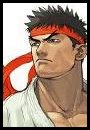
RYU versus DHALSIM
Battle 04: Carnival (Tokuma)
Where:
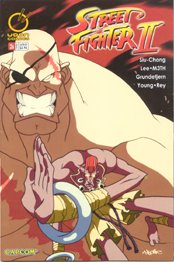
Street Fighter II #3 When: June 1994
Why: Masaomi Kanzaki How: Masaomi Kanzaki

The Story So Far...
Ryu has travelled from Japan to the crime-ridden island metropolis of Shad in pursuit of earning his place in the renowned Third Annual Grand Fight. Something he can only do by competing in street fights to earn a place in the final stadium tournament bracket.

A victory over former boxing champion Balrog has made Ryu a hot prospect, but to assure himself a place in the stadium showcase he must overcome a warrior with unique insight, who has sensed the power of his chi and is determined to defeat him.

Tale of the Tape...
Strength: Ryu 3 (Athlete)
Intelligence: Dhalsim 3 (Straight A)
Speed: Ryu 3 (Athlete)
Stamina: Draw 4 (Athlete)
Agility: Dhalsim 6 (Rubber)
Fighting: Ryu 5 (Martial Artist)
Energy: Ryu 3 (Explosives)
Total: Draw 23 (Champion)

Ryu is the eternal "World Warrior", wandering the globe in search of truth through fist. Although there are significant departures from established Capcom canon in Masaomi Kanzaki's 1993 manga adaptation (and it's Tokuma Comics version edited for US distribution) -- that spirit of competitive fighting remains true!

Ryu won the first major fight of the localized series when he faced Balrog (aka; "Boxer") in a match that almost ended with his assassination.

The sniper was cut-off by
Guile, but this time the US Special Forces man won't have his back. He joins Ryu as a competitor in the Grand Fight Tournament -- a renowned event held in Shad to crown the strongest fighter in the world.

Dhalsim may not have the outwardly appearance of a muscle-bound powerhouse capable of claiming that title -- but his mastery of esoteric yoga techniques has made him an enduring force in the world of Street Fighter.

In UDON's comic book adaptation, Ryu sought the wisdom of Dhalsim's council as he honed his fighting technique and wrestled with the inner darkness of his desire to avenge his master Gouken -- who was murdered by Akuma.

In that encounter, Ryu was humbled in defeat, as he learned the value of Dhalsim's unusual philosophy towards the spirit of fighting. Something Sagat had already experienced when he sought out Dhalsim's training for similar reasons.

Gamers know Dhalsim is ostensibly a pacifist who uses his fighting techniques to protect and sustain his village in India. He believes in the yogic principles of harmony & understanding, mostly reluctant to use the offensive capabilities of his style, which includes breathing "yoga flame" for a variety of short & long range fire attacks, as well as extending his limbs for uncanny striking reach.

Ryu is arguably a superior fighter to Dhalsim, continually honing his ansatsuken style in friendly competition with his martial arts brother Ken and against powerful opponents like Sagat. He harnesses his chi for a variety of fire-based attacks, famously scarring Sagat with his violent shoryuken dragon punch.

Yet, Ryu has also been shown to still have much to learn. During the prequel plot of the Street Fighter Alpha manga, he was defeated by the similarly enlightened approach of Rose. Will his SFII manga battle be a moment of learning - or victory? Let's drop some quarters in the slot and get this fight started!

History: Dhalsim (1-0-0)
The Tape: Draw Ranking: Ryu (#30)

What Went Down...
Dhalsim pulls away the turban and robes covering his body, revealing sparse decoration on his slender frame. A metal ring clinks and dangles around each his wrists, while three small skulls stare across the street to his eager opponent.

Ryu didn't expect to meet the impressive yogi so soon in his quest to reach the Grand Fight. He can tell Dhalsim is a tough fighter, but has no intention of losing his ticket to the big battle. Dhalsim swears on his skulls that he will win.


Ryu makes the first move, closing in on his opponent with an overhand punch -- but Dhalsim dashes backwards to avoid the blow and create space.

The Japanese fighter is stunned to immediately find himself forced to block a kick!

He can hardly believe that Dhalsim's limbs are closing the divide - stretching for dangerous long-ranged kicks and punches!


Undeterred by the blocked kick - Dhalsim quickly follows with a stretching punch!

Ryu blocks that too, but still feels the mental and physical toll of the blow.

His mind begins to race. He can't find a way to get close to Dhalsim!

The yogi takes full advantage of his command of the space. If his limbs cannot strike their target -- he will try a projectile attack!


The ball of Yoga Fire hurtles toward Ryu!

He does his best to mitigate its burning seer -- dropping and rolling on the ground as gathered onlookers watch in slack jawed awe.

"Like I said, I swear on these skulls that I will not lose."

Ryu regains a vertical base, his arms sizzling as he assumes a ready stance.

Fighting through the crowd, his friends Po-Lin and her young brother are shocked to see the martial artist in such rough shape.

Dhalsim throws another furious stretching punch, which Ryu barely manages to block with his burnt arms.

He attempts to fight fire with fire, unleashing a hadoken fireball!


Once again the yogi stuns his opponent -- standing stoically as he catches the fireball with his bare hands and lets it dissipate to nothingness.

He is impressed by the strength of Ryu's chi, but it will be useless against one who has mastered the ways of yoga in pursuit of a noble cause.

Dhalsim reveals the terrible toll of economic hardship suffered in his country. The pointless deaths of innocent women and children who suffer the frequent wars, disease, and starvation that afflict the poverty-stricken nation.

He once pledged himself to the teachings of Brahman, and the ways of yoga, but came to learn they were useless in protecting his people. So he has abandoned the way, intent on earning victory through fighting to divert his winnings to the children. Children like those who produced the skulls he wears around his neck.

Ryu sympathizes with Dhalsim's plight, but doubts that a street fight will offer much of a solution.

He remains committed to fighting for himself, but as he contemplates his last resort, Ryu recalls his master's teachings: 'Listen, the sho-ryu-ken (dragon punch) is a powerful force... but use it only when necessary! It may call upon death!'

Dhalsim forces the issue with Yoga Flame!


Ryu is doused in the inferno of the spewing flame!

Afraid for his friend, young Wong-Mei cries his name -- and Dhalsim hears!

The child's voice provides a momentary distraction. A distraction that costs Dhalsim dearly as Ryu resorts to his most powerful strike -- the shoryuken!

The Hammer...
In repurposing the original chapters of the Tokuma Shoten manga for a format and tone more in keeping with American comics; the English colorized version creates a cliffhanger that doesn't exist within collected tankobon editions.

Secret Wars on Infinite Earths usually adheres to rules restricting an entry to the contents of an individual issue, but fortunately, this issue's final page ends with Ryu charging his shoryuken -- the finishing move of the fight!

We can therefore cheat a little and record a definitive result, with the impact (pictured below), taken from Street Fighter II #4, page four.

The [almost] full-page image is one of the most striking of the adapted series so far, and one of the most successful applications of colour to the original greyscale Kanzaki art.

Unlike some of the other panels featured in this article - this one removes original black & white shading methods, replacing Dhalsim's zipatone flesh with relatively straight colour. You'll notice in other panels they awkwardly coloured right over the top of horizontal lines used to create darker shades in original black & white art. It's more obvious in the digital scans, but it's still a clumsy visual to the eye.

The process of making this image has pros and cons. The American comic creates a clean, well realized version by completely re-doing background action lines in colour, which presumably also made it easier to replace Japanese sound effects with English translations. Unfortunately, the inks still become muddier and simplified in the process, losing the finer details of impact motion lines on Dhalsim's body, and diminishing the marriage of Ryu's dragon fist in non-linear contrast to the background, which is rendered originally with similar lines, just in different directions. Ultimately, the original looks the best, but this one is still nice.


UDON did a wonderful job of localizing the complete Masaomi Kanzaki story in three black & white volumes in 2007, which includes the entire 450-or-so page story in its original format, with English translations.

In addition to revealing various edits of panel size, layout, and slight changes to context of various dialogue exchanges -- the collections also include an entire excised plot running much longer than the eight-issue American series.

Ordinarily I'd skew towards referencing the original format, but I only have two of the UDON volumes, and I think it's interesting and worthwhile to explore the oddities of what Western gamers were subjected to in the 1994 American editions.

Back then you had to work a little harder to get the story details of your favourite characters. Gamers should have been savvy enough to know Po-Lin and Wong-Mei were invented for the manga, along with the Shad location of the series, but this version of Dhalsim at least skews fairly close to the basic premise of the Street Fighter II video game character.

He remains a deeply spiritual practitioner of yoga in the comic, choosing to fight only to raise funds to protect the innocents of his homeland, who are afflicted with famine and pestilence caused by poverty and war. At the time, the manga may have been one of the most effective deliveries of this premise.

This generally became Dhalsim's motivation moving throughout the franchise, albeit with more specific focus on his village, rather than the entire nation of India, which goes largely unnamed in both versions of the translated manga & comic.

India is only specifically mentioned in Dhalsim's entry in the character bios that are included at the bottom of every page in each American issue. These bios inform readers of each character's background and stats, while also compensating for the different dimensions of American comic book and manga page sizes. The manga is slightly more squat, leaving empty space at the top or bottom of pages.

In the earliest contemporaneous versions of the Street Fighter II arcade game(s), Dhalsim was explicitly shown returning home to a wife after the tournament, with whom he parents an inquisitive young son some three years after the game. That doesn't seem to be represented here, but women & children remain significant.

The undersized skulls Dhalsim wears around his neck provide literal and spiritual protection in the comic. They are motivational keepsakes of the children who died in his country, but are ultimately destroyed while saving his life -- absorbing the brunt of Ryu's shoryuken dragon fist that is described as a potentially lethal killing technique. A reinforcement of their defensive, mystic properties.

The concept of the skulls may be a fictionalized derivation of the Kapalika "skull-bearers" of ancient Shaivite ascetics, who worshipped Shiva and carried begging cups carved from human skulls, among other things. Dhalsim does not appear to explicitly share any of the ritual context associated with those tantric sects.

The American version describes Dhalsim's lapsed dedication to "Brahman", a Hindu concept of reality, with ties to the creation deity Brahma, and appropriate etymological origins denoting "to swell, expand, grow, enlarge" -- much like his extending arms and legs. The UDON translation of this dialogue refers instead to a generic, non-denominational "Yoga god". I presume the latter is more accurate.

Both versions of India are depicted as an overtly war-torn nation. I might speculate that was inspired by the Kashmir territorial conflict between India and Pakistan, but I'm not expert enough in world politics to know, or recall, what tensions and unrest existed within the country around that time.

I do have very specific, fond memories of playing Dhalsim in the Street Fighter II video game back in those days, though.

I was a youngster, grabbing life and pop culture with both hands. I was fairly immediately taken with the international flavour and fantastical martial arts characters of Street Fighter II. The iconic battlecries of the various fighters were like a siren-song beckoning me to any game cabinet that might be in the nearby vicinity -- and back in those days there were plenty!

Arcades, movie theatres, supermarkets, delis, video stores, bowling alleys -- you name the location, and there's a pretty good chance they had a coin muncher or two. Of course, for me, Dhalsim will always be linked with the home PC port.

That was how I beat Street Fighter II for the first time. I used Dhalsim -- a character I perceived as having the basic advantage of punching & kicking across most of the screen. It took hours, and playing through a PC glitch that turned Vega's cage fight into a bizarre, twinkling pixel abstract nightmare, but in the end I was successful. A double rite of passage as it was the first time I had ever deliberately stayed up deep into the AM. Something gamers know all about!

We didn't have a PC at home, but I was sleeping over at a family friend's house. At that point I don't think they had any children, so I enjoyed the loose discipline and pop culture corruption of a pseudo-nephew. Alas, "Uncle" David isn't with us any more, but as with many comic books, this one comes with a nice memory.

There are plenty more memories to be had with the Street Fighter II comic series, but for now we move on to other interests. Like other recent entries, this one was inspired by the release of the Marvel vs Capcom Fighting Collection, but if you'd like to make sure I come back to this topic sooner, perhaps you'd like to consider becoming a Secret Wars on Infinite Earths supporter on Patreon.

Secret Wars on Infinite Earths has featured well over 700 fights and ranked more than 1,000 characters! You can find them all for free by diving into the Secret Archive for a complete index of battles in order of publisher, series, and issue -- or by hitting links to your favourite topics found throughout each entry. For Street Fighter, you might need to scroll through to the bottom. You can also find more from Capcom and the Street Fighter world. Shoryuken!

Get daily links to fights inspired by the topics of the day by subscribing to Twitter! Don't forget to smash that like, fave, and share -- and keep your eyes peeled for the week's top trending battles every Sunday on Twitter & Discord! The lively Discord chat is one of the bonuses of becoming a Patreon subscriber!

Winner: Ryu
#24 (+6) Ryu
#75 (-10) Dhalsim

Sunday, December 09, 2007

RYU versus KEN
The Deadly Phantom Faceoff: The Battle Spirit Hidden Between Body and Soul
(Group TAC/Capcom/Manga)
Where:
Street Fighter II V Ep. 12 When: July 1995
Why: Gisaburō Sugii How: Kōji Tsujitani/Skip Stellrecht & Banjō Ginga/Peter Spellos

The story so far...
On a journey to hone their fighting capabilities, old friends and martial arts brothers, Ken and Ryu, embark on a journey across the globe to encounter different techniques and practises of the fighting arts.

These world warriors encounter and study men from China, Hong Kong, and the United States, but it's the advice of the fallen emperor of Muay Thai; Sagat; that leads the pair to jump aboard Ken's private jet to seek a secluded village in India. There, they hope to learn the teachings of the mysterious yoga master, Dhalsim; master of hadou.

Their arrival proves expected as Dhalsim denies the prophecized beasts the teachings he bestowed upon Sagat. Determined to prove themselves as more than mindless brutes, Ken and Ryu remain in the village despite Dhalsim's distance, and endear themselves to the villagers and children.

When bandits arrive at the village seeking the fabled treasure of the forbidden Cave of Ancients, Ken and Ryu rush to their rescue. It is here they face their greatest test as Dhalsim emplores them to not endanger the lives of the villagers unnecessarily. At the order of the surviving bandits, Ken and Ryu enter the tample that claimed the lives of other tomb raiders, walking in with Dhalsim's warning that the monster hidden within is merely a reflection.

Previous Form:
Ryu (#15): High rating victories over Balrog, Sagat, Zangief, & Vega.
Ken (#31): Victories over Sodom & Sagat; with ties against Fei-Long and Ryu.

Tale of the tape...
Strength: Ryu 3 (Athlete)
Intelligence: Ken 3 (Straight A)
Speed: Draw 3 (Athlete)
Stamina: Draw 4 (Athlete)
Agility: Draw 3 (Acrobat)
Fighting Ability: Draw 5 (Martial Artist)
Energy Powers: Draw 3 (Explosives)


- Ryu is a Japanese fighter who was orphaned and raised by the master of the mysterious unnamed ansatsuken fighting style,
Gouken. A life of training would develop Ryu into one of the greatest fighters in the world, utilizing Gouken's fighting techniques and mastery over the hadou ki energies.

Ryu is an incredibly well rounded fighter capable of harnessing his ki for trademark attacks such as; the Tatsumaki Senpuu Kyaku hurricane kick, Hadou-ken fireballs, the Sho-ryu ken dragon uppercut, along with an array of variations of each.

- Ken Masters is a practitioner of the same unnamed ansatsuken martial arts technique mastered by Gouken, Akuma and Ryu.

The style is heavily identified with the mastery over ones ki energy, allowing them to summon powers by methods of hadou. Ken has mastered the hadou-ken fireball and sho-ryu ken rising dragon punch, with a particular flair for the latter.

Ken is a well respected United States tournament champion, having won many tournaments and gained many accolades in his native America. It is this encompassing success that drives him to seek new challenges across the world.

Additonal: Essentially identical in their earliest fighting appearances; Ken and Ryu have been the subject of fan-debate for decades. In previous encounters on the Infinite Wars, they have only ever tied against one and other, representing the continued struggle for superiority that traditionally is said to favour Ryu's power and dedication, despite Ken's highly regarded skill.

History: Draw (0-0-2)
The Math: Ken Masters The Pick: Draw

What went down...
Reluctantly Ken and Ryu enter the Cave of Ancients under the order of the ruthless armed bandit, who already witnessed the effects of the temple's "monster" when it claimed the lives of his two fellows.

With Dhalsim's warnings ringing in their ears, they wander into the darkness where they find themselves engulfed in smoke. Without warning the two are seemingly yanked from their physical bodies, experiencing an astral projection that sees their spirits careening out of control toward a cliff face.

When they awaken, each fighter believes himself to be alone. That is, until a beam of light ushers the entrance of the legendary guardian monster, who protects the treasures contained within the Cave.

The monster appears to both as a hulking, ancient clay warrior who towers over them phsycially and asthetically. Even so, Ken and Ryu both confront the demon with wanton regard for their own safety, concerned only for the fate of the villagers, and the lure of combat.

Ryu verbally assaults the monster with accusations of murder, before taking a ready stance that provokes the monster to break it's silence. The clay warrior sends a thundering echo through the ill-defined space as it charges toward it's prey, letting loose the roar of a warrior.

Elsewhere; Ken suffers the jab of his own monstrous opponent, who puts a halt to his charge with a stiff jab. Ken charges once more at the monster, leaping into the air with a flying kick, ultimately dodged by the surprisingly spry giant.

Ken follows with a barrage of secondary attacks that connect, while Ryu finds himself on the painful end of a combination of blows from the clay warrior.

The monster winds up, connecting with a harsh, direct punch to Ryu's face!
Wiping the blood from his mouth, Ryu refuses to back down, despite noting the guardian's speed and strength, surprising for his size. Likewise; Ken makes his own pledge with the commitment of his fist, which strikes at his foe.

While the pair of wandering fighters face their respective demons, Dhalsim grows despondent. Sensing their progress from outside the cave, he telepathically sends an echo of his cryptic warning, "Beasts, do not forget! The cave is only a mirror which reflects your own hearts!"

Too concerned with fighting, the pair of martial artists fail to ponder on the master's words, instead resorting again to the exchange of blows, over ideas.
To Dhalsim's dismay, the pair launch into another all-out attack.

The guardian(s) continue to show considerable fighting prowess, evading the competent strikes of both fighters, only to deliver it's own with devestating precision! Each fighter suffers a succesion of punches and kicks, culiminating in two seperate uppercuts that rock both Ken and Ryu, respectively.

Ryu unleashes a violent spray of retaliatory punches, finishing with a roundhouse kick that puts the guardian on the back foot, but fails to topple it. The monster comes back strong with a spinning combination of back handed fists that finishes with a diving kick that sends the Japanese fighter airborne!

Exhausted, Ryu pauses on his knee for a moment, digesting the severity of his situation. Strategizing leads only to thoughts of the monster's incredible power, and his skilled fighting style which almost resembles that of his best friend, Ken. Recalling his absent friend, Ryu summons a second-wind to attack once more, demanding to know what the monster did with Ken!

Meanwhile, Ken finds his front blocked, only to be sent through the air with a stiff punch that takes the wind out of him. On the floor, Ken nurses ribs that are broken, and has his own moment of thought, recognising determination in the guardian that mirrors that of his friend, Ryu.

After another explosive exchange of blows, Ken and Ryu each seek a finishing blow with the last of their energies. Alas, both fighter is struck down simultaneously by their guardian opponent with comparable force, leaving them both down for the count, and severely injured.

The pause gives both fighters opportunity to further consider their positions.
As they both lie injured and exhausted, they notice the same unlikely reactions in their seemingly inexhaustible monster opponent.

Though unable to stand and blinded in his left eye by the monster's powerful kicks, Ryu begins to see clearer than before. Likewise, Ken begins to ponder the words of Dhalsim, and the predicament his astral trip has placed him in.
Considering the keys to victory, Ken notices the monster adopt a meditative position similar to that which he and Ryu had imitated from Dhalsim when they sought to prove patience to the Yoga monk.

It is this finally beat that breaks the illusion, and reveals to Ken and Ryu both, the identity of their monster: Each other!

With the test over, the two injured fighters struggle to travel to their goal. Nursing broken ribs, blinded eyes, and severe exhaustian; the two badly beaten fighters retrieved the statuette they were to sent to find, and gingerly stumble their way back to the villagers whose lives are threatened.

The hammer...
Y'know, one of the things I find really fun about a site like this is the accumulation of data. Drawing upon that sports league connection, we get a scenario like this, where two characters have met in combat three times, and each has resulted in a draw!

Some might call that a little tedious, but not only does it provide a wonderful comparison between two characters, but also makes the next confrontation all the more dramatic! Because, really, what we do here isn't much different, in many ways, to what you find in any professional fighting sport card around the world. Which is but one of the many charms to our little experiment here.

Much like the Sagat/Ryu encounter [Street Fighter II V Ep. 9]; this entry comes with an append-fix. After emerging from the Cave with their trophee; Ken and Ryu are met with a double cross by the raider who doesn't want to be identified by two city-slickers.

Having proven themselves worthy by surviving the test of the guardian; Ken and Ryu finally get a chance to witness the pacifist monk in action. Having stemmed the flow of ki in the bandit's last living cohort, Dhalsim goes about quietly disabling the armed men.

When the head bandit turns his guns away from the exhausted fighters to the meddlesome Dhalsim, he finds the Yoga monk holding his ammunition magazine with an eerie smirk. This precedes another pressure-point attack that paralyzes the bandit by restricting the flow of life energy through his body.

Much like the defeat of Nuchitt, we're going to tack this on as a bonus victory for Dhalsim. This may be a little generous, but heck, I have a real soft spot for the Yoga flamer, and it seems fitting, given that he has been announced along with screenshots of Ken and Ryu, for Street Fighter IV.

Despite noting the long standing unliklihood of a sequel, the Infinite Wars featured [apparently logical] speculation that a fourth instalment might finally arrive [The New Challengers!] came good. In October Capcom confirmed Street Fighter IV, accompanied by a brilliantly visual trailer for the game.

It was this week that the eager fanbase was finally privy to screenshots, answering many questions about visual direction, and the nature of the new generation's gameplay.

If anyone ever tries to tell you gamers are any different from [comics] fanboys, you can pretty comprehensively laugh in their face. The same kind of negatives exist in both realms, and they were out in full force with the release of images [like the above], which depict the new direction for the series.
Of course, as much as I'd love to act smug and superior, I'm not without my own minor qualms about recent developments.

First, I just have to say; the only thing more disturbing than Street Fighter fans desperately barking about keeping the games in the pixel arena of 2D fighters -- is the fact that a good many of them whole heartedly mean it!

Comics fans know all too well the perils of fanbases obsessively reluctant to progress. It's an attitude that can potentially render a company's attempts to move forward impotent, and given the odds that were put against SFIV ever happening, that's a concerning prospect. More so, considering that SFIV has revealed itself to be something many-a-fan, myself included, dreaded: another retread of the now classic (and devestatingly recycled) Street Fighter II.

Placing it in this era presumably gives makers not only a familiar place to start with, but also a cast of characters already well exposed to much of the purchasing portion of the public. If one was to read between the lines, SFIV's tagline, A New Beginning, mind indicate that this will at least mark the definitive account of SFII, paving the way for regular sequels that pay more attention to progession of story, and satisfaction of experience. [Yes, that's setting myself up for disappointment, but I can dream!]

Still, for a negative, getting the opportunity to play as characters like the confirmed Dhalsim and Chun-Li, is anything but a punishment. Sure, it raises a lot of mathematical questions, but it gives us a chance to reexperience these characters in the ever-popular domain of cell-shaded polygons, which in this instance, carry a more detailed render than many cartoony predecessors.
It's a textured look that seems to be becoming something of a hallmark of next gen games, but really, it's both unlikely, and far too soon to consider this the status quo. For Street Fighter IV, it's the happy medium between progress, and the classic depiction of characters.

Not wanting to delve into the mire of more negatives, I close with a few notes. I would agree with some fans that there's work to be done in better identifying the characters, particularly in facial structure. That said, for all the iffy artwork, it was kind of interesting to see a pseudo-realistic depiction of Ryu that actually made me think Japanese! This pastiche of grimey realism and manga sensibility is just further indicative of it's SFII origins, which a good many newbies probably won't recognise.

The Fight: 4.5 The Episode: 6

And just in case the SFIV made you forget what brought us all here, maybe you want to do some last minute Christmas shopping on Amazon! You'll again note the many episodes between each feature from SFIIV, making it an ideal series to explore further, if you've enjoyed these reviews!

Sunday, December 02, 2007

QUICK FIX DOUBLE FEATURE: Training Mode!
RYU versus DHALSIM
(UDON)
Where: Street Fighter II #3 When: February 2006
Why: Ken Siu-Chong How: Alvin Lee

Quick Fix...
Well, I, hmmm... It's funny how things can get away from you a bit, isn't it? I thought I had this week's SF entry all planned out, but things kinda went awry when I realised my memory of the Ryu/Akuma credits scene in Alpha was substantially more involving than the actual scene.

Y'know, I'd been thinking about stretching our Street Fighting out to accomodate more excitement in the lead up to the fourth core installment to the [game] series, but I think this delay has given me a good bit of perspective.

September marked the beginning of what will, come the end of the year, be a four month stint of Street Fighter indulgence. Regular War Mongers would be forgiven for forgetting that original mandate; the desire to see if regular weekend features could sponsor a Street Fighter into the top five rankings before the end of the year. As you'll already know from the Punch-Up, no one's reached that achievement, but I think if anyone is going to, we all know who it'll be.

With the "shock" announcement of Street Fighter IV's surprise release, came quick confirmation that iconic characters, Ken and Ryu, would be among those returning for this new beginning. This not only highlights the star duo's staying power, but also the liklihood of their rise to the top of our ranks.
I think we can all safely rest assured that if any Street Fighter can take it to the superheroes, it'll be Ryu.

When UDON relaunched the franchised series, they did more than change the title to the more familiar Street Fighter II. At the core of their creative decision making, the desire to brign the story back from the periphery, to refocus on the spine of Ryu's journey of discovery, and combat.

In combining elements from the various games, they dance around the learning curve for the young fighter. Layered beneath his quest to avenge his dead master is elements that invariably connect to his struggles with the killing urges of the Dark Hadou, and his desire to harness the greater philosophy of combat.

Question, if you will, the handling of the various secondary characters, but impossible is it to deny the success this arc has brought to the Dhalsim character. Despite essentially being characterized as a shamanic pacifist, Dhalsim has been one of the most enduring characters to be included in the games. As noted in a previous entry [Fantastic Four #361], he is among the relative few Street Fighters to have been included in the Marvel vs Capcom series of games.

While it may not necessarily led greater credence to his role as a regular battler, his prevelance in the series is at least complimented by the idea that Dhalsim's yoga teachings can help one master the darkness all of these characters risk facing. There may be a gaming reference for this, but as far as I'm aware Dhalsim's story usually revolved around fighting to raise money for his village; thus making this among the many vague references to other Street Fighter sources, perhaps inspired by a 1995 episode of the V animé, which also connected Sagat to Dhalsim before Ryu would seek training [noted; Street Fighter II V Ep. 9].

Having already trained Sagat in UDON-time [Street Fighter II #2]; the mysterious Yoga master helps Ryu come to terms with his inner darkness, and desire to seek revenge against the murderer of his master -- Akuma!

Dhalsim notes Ryu's impressive strength, speculating that he may even be more powerful than Sagat, when he first sought his training. Even so, Dhalsim floats and weaves around Ryu's attacks with a gawky grace, noting that Ryu's ingrained training may in fact be a greater obstacle on his path.

The master leaps over his student's sliding low kick, decrying rage in one's fist and victory as the ultimate goal, demonstrating it's weaknesses as he thunders down upon Ryu with a twisting yoga spear. Dhalsim keeps Ryu on the defensive, throwing two extended fists, before unleashing the legendary yoga flame!

Ryu blocks the flame attack, but finds his defenses penetrated as Dhalsim makes the claim that, as he is, he will never hope to defeat Akuma. A sensitive issue for Ryu, he explodes with rage, launching into a hurricane kick attack.

Yoga! Yoga! Yoga! Yoga!
Dhalsim ducks Ryu's furious attack, and snatches him up for a humiliating head-pound grapple. Relinquishing the hold, Dhalsim says with a smile, "Are you ready to begin unlearning?" Humbled, Ryu replies sheepishly, "Heh... I think I might be."

Thus, Ryu finds himself on the path to purity of spirit.
With his training just begun, we move onward, to the latter half of the issue.

The Fix: 4 The Issue: 4
Winner: Dhalsim

Despite a mandate to bring the story back to it's core, don't be fooled into thinking Street Fighter II is the Ryu show! Central characters from the games like Chun-Li and Cammy continue to feature, while the likes of Bison, T.Hawk and Gen factor in, also.


RYU versus AKUMA
(UDON)
Where: Street Fighter II #3 When: February 2006
Why: Ken Siu-Chong How: Alvin Lee

Quick Fix...
We've touched upon the Dark Hadou at length in previous entries [Ken v Ryu; Akuma v Gouken; Shun v Zangief], and by now you should be well familiar with it in a context not unlike 'the force' as described in Star Wars.

As a metatextual facet to the mastery of Hadou and the Ansatsuken style used by the "shotos", it represents the evils of hatred and revenge in combat. Ryu's training with Dhalsim reaffirms these values, and steers him toward a path devoid of emotion, but conscious of the life of those around him. Dhalsim specifically refers to fighting with the well-being of an opponent in mind, which can largely be boiled down to terms familiar to any sportsman who finds themselves striking the ball, or hitting the shots, frustratingly well in the relaxed condition of recreation.

Making yet another potential reference to Star Wars, Ryu finds himself mastering the powers of focused ki, when a dark voice questions him confrontingly about his deep-seeded loathing for the death of the master Gouken.

Seemingly confronted by the dark master; Ryu fulfills this grim prophecy, responding to the charging of ki energies with a furious cry, "Akuma!!!"

Ryu comes under the looming Akuma with an uppercut to the gut, before blocking an overhanded chop from his master's killer. Akuma provokes Ryu with taunts of his weakness and inability to avenge Gouken, prompting the young fighter to flow through the block into a devestating throw.

With Akuma on his back, Ryu unleashes a barrage of mounted punches that crush at his enemy's nose. Blood sprays as bones begin to crunch and crack beneath Ryu's gloved fist. His ki crackles around him, gathering into a storm of energies as the fighter is seduced by the prospect of vengeance.

The haze of anger clears as Dhalsim lifts the veil of illusion from the Japanese fighter's mind.

Squat in a crater of his own making, Ryu realises that he has failed Dhalsim's telling test. The master poses a question of Ryu's true motivations, asking him to find within himself the truth of whether he fights for justice, or i motivated by his own deep desire for revenge.

This illusion is reminiscent of the familiar Empire Strikes Back battle that seemingly sees Luke Skywalker come face-to-face with Darth Vader. When Luke succeeds in striking Vader down, he is faced with a dark vision of himself, very similar on a metaphorical note to this scene, where Ryu is turned inward by his master's deceit.

Though Dhalsim fears for Ryu's philosophical future, he reveals to him the identity of a fighter who long ago defeated Akuma - the only known fighter to have done so other than his brother, Gouken. Thus, Ryu's wandering travels begin anew, taking him to the Genhattan Restaurant in Hong Kong - home to the assassin -- Gen!

Ryu's adventures will no doubt feature again, but for now this overdue entry finally comes to a close. If you've noted the absence of the now regular Amazon purchasing links, be informed that Street Fighter II has not yet been collected.
You'll probably be able to retroactively find the appropriate links in the future.

The Fix: 4 The Issue: 4
Winner: Non Applicable

Though one might argue the illusion was cast by Dhalsim, we're going to call this one an internal struggle. No results will be derived from this battle, which leaves only four more entries for a Street Fighter to step up to the top five rankings! Will it happen? Stay tuned for more Sunday Street Fights in December!

Sunday, September 09, 2007

QUICK FIX DOUBLE FEATURE: Go For Broke!
VEGA versus DAN HIBIKI
The Tournament Begins (Group TAC/Capcom/Manga Entertainment)
Where: Street Fighter Alpha When: 1999
Why: Shigeyasu Yamauchi, Joe Romersa, Reiko Yoshida, & Kirk Thornton How: Kazuyuki Ishikawa

Quick Fix...
With the various goings on around the place, we've had an influx of new readers. Some of them have actually arrived here because of previous Street Fighter entries, but for those who haven't, let it ring out through the village: I'm as keen on superheroes as I am on beat 'em ups!

Okay, so maybe not all beat 'em ups, but I think I've got the basics covered. SF, Mortal Kombat, Tekken, Dead or Alive. Sure, I can stretch to some of the others, but this would undoubtedly be my core, with DOA bridging the familiarity gap between those I'm less aware of, like the SNK series, and those I love, like Street Fighter!

Some fans might ask, why Street Fighter?
It's failed to make the transition to "3D," it doesn't have FMVs, it often lacks in the story department, and the wheels really fell off during the process of Street Fighter III and the pseudo 3D Ex series.

I'd say, sure, a lot of that is true, but the undeniable appeal of that initial idea, and the memorable revamp it underwent going into Street Fighter II keeps me wanting more. It's the characters and the style that have made a loyal fan of me, and also represent such interesting ideas for comic, manga and animé.

As a brand, Street Fighter is now regarded as little more than a nostalgia product to be regurgitated in several vaguely different forms. The product has arguably been squandered over the years, hovering too long around tweaked revisions at the cost of casting an illusion of forward momentum. SFIII, the final true attempt to move forward, remains one of the most disappointing, redeemed only by it's final revision which made long overdue inclusions of classic characters.

Consistency of characterization and the purity of the design seemed lost on the final generation of Capcom contributors. Garrish pseudo-superheroes, monsters and robots replaced the classic formula of martial arts caricatures, complimented by broad, but distinctive, ethnic strokes.

This is a fact almost certainly recognised by those that would develop the property for the minority market still interested. Largely more popular in the US, the Street Fighter Alpha animé "OVA" project was produced, paying close homage to versions of the characters not yet capitalized upon in animated form.

While Alpha stays much closer to the popular starring characters like Ryu, Ken and Chun-Li, it expands it's cast from well known supporting characters [Sakura, Birdie, Akuma] to cameos with Alpha initiates like Adon, Rolento and Cody.

Narrowly missing out on entering an American Street Fighting tournament held in a partially demolished highrise, Ken Masters accompanies an enthusiastic Sakura to find Ryu. There they witness one of the tournament matches, a brutal encounter between the vainglorious Spaniard, Vega; and the similarly arrogant, but entirely unjustified - Dan Hibiki.

Vega makes good use of his acrobatic abilities, leaping into the air with Hibiki already on the back foot after suffering a slash from Vega's wrist-mounted claw.
The Spaniard twirls earthbound, slashing this time at the pink-garbed martial artist's face.

Vega finds his way behind Dan, wrenching back on his neck before pulling back with his full weight to position Hibiki on Vega's feet. With a springy strength, the masked matador launches his opponent, catching him in mid-air with a flipping stomp. Unrelenting, Vega looks to finish the fight with trademark brutality.

Letting out a shrill scream, Vega buries his claw in the floored Hibiki's chest, erupting a volcanic explosion of blood and gore. Though his mask hides his emotions, one can only imagine the ecstatic pleasure the sadistic Vega takes.

It would be diplomatic to express some kind of interest in the Dan character, but let's be honest, the world loves a bastard. Vega is one of the prime examples of the enticing and pure characterization of Street Fighter's elite.

Vega is unashamedly comprised of utterly vivid portions of vanity, psychotic massochism, all mixed with the glamor of the Spanish matador. Though his connection to the martial arts is marginal at best (his style lazily described as Ninjitsu by American translators), he remains one of the most memorable characters to come from the first revamp, Street Fighter II.

The Alpha "movie" does manage to stay relatively faithful to the characters and concepts, even though it pinwheels on entirely original material to this particular story. Included for the first time, a data-obsessed scientist, his power absorbing android, and a much maligned fictional Brazilian brother to Ryu.

When laid out like that, it's perhaps evident just how remarkable it is that Alpha can be recalled in such positive regard. Again a testament to the power of using the characters well; Alpha peppers cameos throughout, staying closer to an independent story than the revered SFII animated feature, but utilises the cast much better than the unrelated sequel that follows: Generations.

Even so, with so much weight behind the cast of the series, it's a wonder there wasn't more effort made, particularly in the sequel, to include more characters into the story. It seems unfair to disregard the tale of Ryu/Akuma as what it is, but I think those broader, second-tier character appearances are really what remains the driving force behind any successful Street Fighter venture.

The Fix: 4.5 The Movie: 5.5
Winner: Vega

[Yes, I'm using the US names. In a perfect world we'd have a streamlined, one-answer option, but with CapcomUS now owners of the franchise, I'm pulling rank. If you're interested in Street Fighter, but are unfamiliar with the story, SFAlpha is a great place to get acquainted, particularly with core characters like Ryu and Ken.]


SAGAT versus DHALSIM
Yoga Mind Trick (UDON)
Where: Street Fighter II #2 When: December 2005
Why: Ken Siu-Chong How: Skottie Young

Quick Fix...
Street Fighter Alpha takes full advantage of one of the unique skills of the Japanese, maintaining a relatively simple story, but using style over substance to justify maintained interest in the product. It skillfully dwells on the minutia, without actually going into any depthy meaning or layers. It simply is what it is.

Fortunately, while many of the Street Fighter characters have struggled to develop more complex motivations in film or game; the good folks at UDON manage to maintain not only a beautiful and recognisable visual approach -- but also a script that compliments much of what we know of the characters, while still directing them in a unique, reasonably progressive story. Again, it isn't revolutionarily dense, but on the twenty-two page platform of a comic book, the luxuries afforded in animation quickly melt away.

For comics, Street Fighter perhaps represents one of the most inviting and exciting licenses available. Irrespective of it's in-built fanbase, the characters represent the ultimate in branding. Even the best of the second-tier is instantly recognisable thanks to brilliantly simple design. Each character brings not only a trademark visual, but a two-dimensional characterization that is an extention of their look, a trait that leaves plenty of room to elaborate in an on-going medium, without presenting a slate too blank to enjoy from the beginning.

These well defined characters really do lend themselves to an on-going medium, providing recognisable perspective from which they can clearly react to the on-going events of a story or situation. A true master would be able to develop and shape these characters into more depthy personas, but even the contemporary average need only stay faithful to succeed as the SF brand requires.

UDON does well to do a little bit of both, meandering it's way through familiar concepts (like Cammy White's brainwash ordeal under Bison), but also adds developing spice to stories and relationships, like Sagat's search for knowledge and power in the wake of his famous defeat at the hands of Ryu (circa the first, often forgotten side-scrolling Street Fighter game).

Either taking inspiration from the Street Fighter II V animated series, or arriving by the same logics; UDON takes Ryu on a journey to the mysterious yoga master, Dhalsim. Hoping to find inner peace and a control over the potential of the dark hadou energy, Ryu discovers Sagat, who has also been training to control his inner rages and become a better fighter.

In this back-up story taking place after Sagat's defeat of Ryu [Street Fighter II #2], we learn of Sagat's journey with Dhalsim, and the beginnings of his exploration of the mysterious yoga arts.

With the glow of a campfire to light them, Sagat confronts Dhalsim in the heart of a forest. There he challenges Dhalsim to prove the value of his yoga teachings, apparently unconvinced of their capability to aid his already impressive strengths.

Dhalsim gladly takes the challenge, using his defying contortions to evade Sagat's kicking attack. Instead of matching the violence, the stoic Dhalsim makes a fool of Sagat's brutish style, forcing blood to cascade from the Muay Thai fighter's nose with little more than the power of his energy.

Dhalsim follows it - extending his limbs to strike Sagat's proud jaw - before sending him through a tree with a devestating body blow.

The yoga master schools Sagat not in the physical art of fighting, but the clarity of mind. He decrys Sagat's motivations, and willing surrender to anger and hatred, "... the most distracting and dangerous of those emotions."

With quiet confidence, Dhalsim declares there is much he can teach Sagat, before punctuating his point with his signature attack, the yoga flame!

On his knees, Sagat opens his eye to discover he is unharmed. Dhalsim reveals the power of the mind, prompting Sagat to take a meditative position by the campfire. He is now Dhalsim's student.

Most casual fans will recognise Sagat as the scarred Muay Thai fighter of the series, and may even recall his position as final of the three sub-bosses in Street Fighter II. He supersedes Balrog (boxer) and Vega (see above) as Shadaloo bosses working for Bison, his motivations directly influenced by his apparent defeat (and scarring) at the hands of Ryu, who defeated him with the legendary sho-ryu ken attack that left his chest marked forevermore.

It's those origins that always leave me a little conflicted about a Sagat who is portrayed in a more positive style. In the TV anime series, SFII V, Sagat is portrayed as a fallen champion who was framed when he refused to take a dive for the criminal pawns of Shadaloo, the Ashura. In prison he encounters Ryu, undertaking a similar quest to develop his martial arts skills, and the two become friends as Ryu reignites his fighting spirit and good heart.

If I had to choose, I'd definitely take the UDON version.
Having missed a chunk of the first series, I'm not certain when I assume Sagat has not yet come into the service of Shadaloo. His motivations resemble Ryu's more closely, desiring only of fighting superiority, initially in the name of besting Ryu in a rematch, but after Dhalsim's training, in a more general sense.

Sagat, like Vega, is one of those secondary characters that really jazzes me.
Highlighted by his varying characterization, Sagat's story really doesn't begin until it breaks away from Ryu, and even then further depth is sketchy, additions like his service to Bison, and his arrogant student, Adon, being noteworthy.

Still, despite this general consistency of minimally developed characters, I just can't get enough of Street Fighter. Still months behind on purchases, it's perhaps the UDON translated manga and original releases I'm missing the most right now. Maybe to make up for it, we'll consider a little experiment...

The Street Fighter universe famously brought about a convergence between gamers and comic fans with the Capcom versus Marvel series, and it's many different entries. On a website dedicated to ranking superheroes based on their fights, can they possibly hold their own against an incursion of street fighters?

There are only three months left in season 2007, so maybe we'll play a little game with Saturdays. Let's see if A) I can keep it up, and B) if a Street Fighter character can usurp a top five ranking in 2007 before the year is through.
One would expect someone like a Ryu to take the spot, but without specifically contriving such a result, we'll leave it open. We may just get a surprise!

The Fix: 3.5 The Issue: 6
Winner: Dhalsim

[UDON continue to honour Capcom with their contributions to the Street Fighter franchise. Will they contribute to catapulting a Street Fighter into the Infinite Wars top five? Drop a comment and show your interest, and stay tuned to see if the impossible can happen! Get ready fighters. Go for broke!]