Showing posts with label Flash (Barry Allen). Show all posts

Sunday, July 30, 2023

GORILLA GRODD versus THE FLASH TRIO
Beyond The Super-Speed Barrier! (DC)
Where:
DC Special Series #11 When: 1978
Why: Cary Bates How: Alex Saviuk

The Story So Far...
An ordinary night in the lives of three civilians becomes a bizarre mystery as each is summoned to don their identities as The Flash and Kid Flash of two worlds -- and race to meet in a single, solitary location on an Earth-1 hillside.

Compelled to run at blistering speeds against their will, the speedsters discover themselves confronted by a shocking force capable of bending their very impulses. Though believed executed for his crimes in Gorilla City: Super-Gorilla Grodd lives!

Tale of the Tape...
Strength: Gorilla Grodd 5 (Super-Human)
Intelligence: Barry Allen 5 (Professor)
Speed: Barry Allen 7 (Lightspeed)
Stamina: Barry Allen 6 (Generator)
Agility: Gorilla Grodd 4 (Gymnast)
Fighting: Draw 3 (Street Wise)
Energy: Gorilla Grodd 2 (Projectile)
Total: Gorilla Grodd 28 (Metahuman)

Gorilla Grodd is the big-brained super-ape with super-primate strength, stamina, and durability, with telepathic powers to take it to the next level, but if he's so smart -- why is he challenging three generations of The Flash?!

Barry Allen is the frontrunner of the trio as the fastest man alive and arch-nemesis to Grodd. Thwarting the Anti-Monitor's attack on reality robbed Allen of decades of print, but his eventual rebirth brought him racing back to the present day to reaffirm his dominance over the Speed Force!

During Allen's lost years it was Kid Flash who assumed the mantle of the "Scarlet Speedster". Wally West established a connection with the speed force like no other Flash before him. This is our first time visiting his junior years, but his later exploits have included outpacing Marvel's Quicksilver, and teaming with Barry to stop the sprint of the Lady Flash.

Jay Garrick is the one and only "golden age" Flash who started it all! He might not hit the top speeds of his younger counterparts, but that never stopped him fighting the good fight against the monstrous Morgauth, villainous Reverse-Flash, or resourceful Rag Doll!

All three can run rings around Gorilla Grodd, so the question is: How can Grodd counter-act a triple threat of super-speed? Well, there are a couple of ways...

Numbers actually might work against the Flash trio if Grodd can use his mental powers to turn one or more against each other. 
This mind-controlling technique was on full display when he marshalled the Ultramarine Corps against Wally and the Justice League in JLA: Classified #3!

The Flash may be able to think fast on his feet, but we saw Barry Allen succumb to this very type of subterfuge when the Black Lantern Martian Manhunter telepathically tricked him into targeting the Green Lantern!

When mind games fail, Grodd can always use more direct means to turn enemies into allies. His quest for gorilla dominance has seen him use many methods to turn the populace into likeminded primates, as he did in Supergirl #3 with a mystical talisman.

The Tape: Flash Team-Up Ranking: Barry Allen (#20)

What Went Down...
Puzzled by a mysterious, irresistible force that compelled Barry Allen and Kid Flash to run backwards to their destination -- and bring Jay Garrick spinning from Earth-2 -- the trio is equally shocked to learn the source: Super-Gorilla Grodd!

Knowing Grodd by reputation -- Garrick doesn't miss a beat joining Kid Flash in a two-pronged attack that sees the two racing to grab one of the super-gorilla's arms and spin him at super-human speeds!


The attack does the trick, but as Grodd falls flat on his face, Barry Allen informs his friends that he learned from Solovar himself that Gorilla Grodd was executed in Gorilla City by inter-dimensional molecular dispersal!

As Garrick checks on the motionless Gorilla, he makes the grim discovery that the ape before them is indeed dead.

The Flash knows his allies couldn't have inflicted lethal force, and a booming disembodied voice confirms the truth. The ape before them was in fact Jroyy -- an agent killed with "mind-power" for outliving his usefulness.

Suddenly the voice comes from the mouth of Kid Flash as his face twists into a sinister, contorted parody of a grin, and he taunts The Flash with the mystery: "What has become of your detective abilities, Flash? You should have deduced who I am by this time!"

The Scarlet Speedster quickly recognises the voice to be Grodd's -- even as it suddenly springs forth from the mouth of Jay Garrick!

The Golden Age Flash becomes the vessel from which Grodd reveals that the only thing that could penetrate the dimensional barrier that trapped his atoms was precise super-speed! Thus, Jroyy orchestrated events that would take each of the three speedsters unwittingly to the correct vibrational frequency.


Speaking through Barry Allen; Grodd describes the billions of his atoms that clung to each of his foes as they passed through his dark domain. Then in a single terrible instant -- Super-Gorilla Grodd returns!

Freed from Grodd's molecular influence -- the trio of Flashes race away from the reassembled villain to regroup. Quickly gaining ground, they turn back to make a bee-line towards the scheming simian.

Once again its the eldest & youngest speedsters who reach their target first, but neither of them could've imagined that Grodd would've gained his own temporary super-speed as a result of piggybacking on their molecules!


A rapid swatting of his hand allows Grodd to stop the charging Kid Flash in his tracks, before effortlessly side-stepping the Golden Age Flash, turning his momentum against him with a simple super-fast toss into a nearby tree!

Earth-1 Flash closes in at high-speeds, digging his heel into the ground to launch a blanket of rocks at the Super-Gorilla!

Alas, Grodd's temporary super-speed and powerful mind-powers allow him to face the spray of rocks with impunity -- telekinetically hurling them at The Flash!


With no speed advantage and nowhere to run -- Flash has no choice but to spin on the spot, using his incredible momentum to deflect the incoming projectiles.

Kid Flash attempts to take advantage of the distraction, rushing Grodd from behind with a flurry of hammer-fists -- while Jay Garrick recovers to dive straight at the villain with a flying kick!


Seeing it coming -- the Super-Gorilla vibrates himself at fast enough speeds to achieve molecular intangibility and leave the two Flashes colliding into each other!

The Flash takes a page out of his sidekick's book, using the distraction to dive onto Grodd's back and start stomping at high speed!


For a moment it seems the gorilla is capitulating, but he soon sends The Flash flying into the dirt with a speedy back kick!

With the Flash trio on the ropes, and mere seconds of residual super-speed at his command, Grodd hops to his feet and begins racing across the battlefield in preparation for delivering a single finishing blast of mind-power!

Grodd's gloating of superiority unwittingly inspires a new tactic in Barry Allen, who turns his sprint towards his allies -- running at such phenomenal speed as to collect their atoms in a confusing blur of three speedsters!


For an uncanny moment the three Flashes are merged as one -- allowing The Flash of Earth-1 to pilot their combined speed into a single powerful punch! A mighty knock-out blow even Super-Gorilla Grodd cannot withstand!

The Hammer...
A gloriously bizarre end for a mildly unusual episode.

The Flash
 takes the team-up to its most literal conclusion -- combining powers & bodies to wholly share the victory with Kid Flash and Jay Garrick!

It's not a trick I remember The Flash pulling very often, which might be why I'm not completely disgusted by it.

I get a little crankier about the on-going trend of superheroes switching powers and identities these days. Today we have to endure entire years of this type of distracted nonsense, but in this story, it's a quick little gimmick, using the established trope of The Flash manipulating his molecules at high speeds to perform weird & wild feats. A colourful end to a fun plot.

A more modern take on the story would probably see the speedsters creating a slipstream to slingshot the fastest of the trio towards their target. A less mind-bending version of sharing speed, but hey. Let's just chalk it up to Speed Force.

Back then they didn't have a catchy name for the extra-dimensional super-normal phenomena that informs The Flash's incredible abilities, but its intuitive invention is here on display in 1978. If Gorilla Grodd's dispersed atoms weren't imprisoned in the Speed Force dimension itself, similar concepts aided in freeing him.

The story of Grodd's temporary death runs throughout the issue. 
Not to be confused with the classic 80-Page Giant series; DC Special Series #11 never the less uses the 80-page format to tell a value-packed one dollar story, comprised of six or so chapters, each an episode in the lives of the three Flashes featured.

Solovar oversees the execution of the criminal super-gorilla in the opening story, setting up the thrilling main event featured today, after each Flash is run through their paces by various opponents, with covert interference from Jroyy.

If you think opening with Grodd in what amounts to an electric chair death scene is grisly, wait until you see Kid Flash chasing his girlfriend Leslie on an out-of-control motorcycle that goes so fast -- her body bursts into flames! Reducing her to a skeleton! It's just an illusion cooked up by Jroyy, but geez! That's a bad date!

Irv Novick, Jose Luis Garcia-Lopez, and Kurt Schaffenberger handle pencils on the other chapters, all written by Cary Bates, but our featured installment boasts a 26 year old Alex Saviuk, with inks by Joe Giella. A nice look into the early work of what would become a favourite Spider-Man artist in later years, both on the mainline books, and the aesthetically memorable Spider-Man Adventures.

Saviuk's action is pretty solid and the Amalgam-style mash-up design of the three merged speedsters is amusing enough. For the time, and circumstances, it's fun to see Grodd grifting some residual super-speed for his latest clash with his arch-nemesis, even if the real enjoyment comes from Flash facing off against opponents who challenge him in ways other than his own powers of speed.

Yes, I'm taking another swipe at contemporary storytelling, where if The Flash isn't being sucked into time travel and multiverse shenanigans, he seems to be stuck in the quagmire of everything being coloured by speed. TV seemed to be particularly guilty of this. I'm glad to look back at one of his other classic foes.

If you enjoyed this article and would like to see more of The Flash's famous rogues gallery -- consider becoming a supporter on Patreon. As a thank you for helping make all of this possible you'll unlock options to sponsor future entries, or join the discussion on the Discord server. A big thank you to new patron Dominic!

Secret Wars on Infinite Earths has recorded over 700 battles and ranked well over 1,000 characters! Find them all by following links throughout each and every post, or by diving into the Secret Archive for a complete index of featured fights in order of publisher, series, and issue number.

Get free daily links to fights inspired by the topics of the day by subscribing to Twitter and Facebook, or by becoming a freebie follower on Patreon. Don't forget to smash that like, fave, and share -- and keep your eyes peeled for the week's top trending battles every Sunday on Twitter, Patreon & Discord!

Winners: The Flash, The Flash & Kid Flash
#16 (+4) The Flash (Barry Allen)
#24 (+14) Kid Flash (Wally West)
#146 (+288) The Flash (Jay Garrick)
#449 (-2) Gorilla Grodd
#1010 (new) Jroyy

Friday, December 21, 2018

FLASH versus KID FLASH
Meet Kid Flash (DC)
Where:
The Flash TV Special #1 When: 1991 Why: Mark Waid How: David Williams & Darick Robertson

The Story So Far...
When a freak lightning bolt struck police forensic scientist Barry Allen and threw him into a shelf of laboratory chemicals - his life was changed forever!

With the help of STAR Labs scientist Tina McGee; Barry discovered his body chemistry and metabolism was radically altered, granting him the gift of moving at super-human speeds!

Wearing a high-tech, heat-resistant suit designed by STAR Labs, Barry uses his powers to fight crime in Central City as The Flash! Tina continues to aide him in his mission, but when she attempts to understand his transformation further by recreating his origins in the lab -- a criminal on the run accidentally receives the same powers! Now The Flash must race to stop a super-fast crime-spree!

Tale of the Tape...
Strength: The Flash 3 (Athlete)
Intelligence: The Flash 5 (Professor)
Speed: The Flash 7 (Light Speed)
Stamina: The Flash 6 (Generator)
Agility: The Flash 2 (Average)
Fighting: The Flash 3 (Street Wise)
Energy: The Flash 1 (None)
Total: The Flash 27 (Metahuman)

When the nineties dawned on DC Comics - Barry Allen had already sacrificed himself to save all existence in Crisis on Infinite Earths #8. Five years had made him the stuff of legend -- that is, until television brought the Silver Age Scarlet Speedster back to life for a twenty-two episode, live-action series on CBS!


The Flash on television was a pretty respectable adaptation, enjoying the same basic origin of a lightning bolt striking the police scientist onto shelves of chemicals. There were a few key differences our Tape stats (based on an iconic definition of the character) don't reflect, though.

His speed, though impressive, was not quite what you'd find in the comics. He vibrated his molecules through solid matter once or twice, but usually relied on fast-paced antics, such as tying people up, or throwing things. The reality of it was made-for-TV special effects, but you can also put some of this down to this being pretty early in the character's superhero career.

This Flash was also susceptible to bouts of fatigue and weakness, essentially suffering from acute hypoglycemia due to his altered metabolism. He managed his blood sugar through eating, and it became less of a concern as the series progressed.


Kid Flash did not appear during the lone season. As we're about to learn, Vince Everett is a notorious juvenile delinquent skirting justice because of his young age. He's about to be charged as an adult when he runs afoul an experiment to recreate The Flash's origins at STAR Labs. The result is a second speedster!

The Flash is no stranger to going up against equals in the comics. We've seen Barry Allen race against Savitar [Flash: Rebirth #1], Lady Flash [Flash: Rebirth #2], Superman [Flash: Rebirth #3], and Professor Zoom [Flash: Rebirth #4]! On the show, he met his own genetically-engineered duplicate, Pollux, in Episode 18: the Lenny Van Dohlen starring Twin Streaks.


You'd expect inexperience to trip up any new would-be speedsters in the TV universe. Even with youthful exuberance, Everett should eventually succumb to the same metabolic weaknesses experienced in Barry Allen's early adventures.

The Tape: The Flash Ranking: The Flash (#17)

What Went Down...
Speeding criminal, Vince Everett, blazes by a patrol car with his newfound super-human swiftness. The cops manage to call ahead for a roadblock...


... but nearby road repairs provide a pile of gravel -- deadly high-speed shrapnel in the hands of a super-humanly fast pitcher! Cops dive for cover as the tearing fragments ignite gasoline tanks and cause their cars to explode!


The Flash arrives on the scene to stop Everett before he kills somebody, but finds it hard to lay hands on the junior speedster. Everett keeps on step ahead of his fast-running foe, carelessly tearing through a kid's lemonade stand!


Flash stops to catch the airborne kids and rescue their produce all in the blink of an eye! It provides the self-proclaimed "Kid Flash" the distraction he needs to come up with a name and snatch the emblem from The Flash's chest!


Exhausted by his heroics, The Flash can only watch as Central City's newest runner makes a high-speed getaway!

The Hammer...
Not exactly a triumphant foray into The Flash's television past, but I'm a little short for time this week, and I'm hoping we'll get a chance to talk more about the show in the future. Round 1 goes to Kid Flash, but Round 2 waits!

Like a lot of fans, I was pretty excited to see John Wesley Shipp back in the red suit for CW's Elseworlds crossover. We talked about that a couple of months ago in Hero of the Week. Today, I'm going all in on nostalgia!

As a big fan of the show - I actually picked up The Flash TV Special, on the cheap, a few years ago. I don't remember it on shelves in '91, so I was curious to see if it picked up the slack with a more comic-style story the TV show couldn't pull off. Kid Flash gets close, but still feels very in-keeping with the show's stripped back style of superhero action. Which is to say, what worked on the screen reads a little passé on the page.

I'm not sure I can adequately convey how excited I was when commercials started airing for The Flash. I'm not sure I'm even capable of those levels of excitement any more! I was already a Flash fan from comics, and the mostly faithful red & gold costume had me off the chain from the start!

Local airings and bed time got in the way of total immersion. I saw most of the much-hyped debut, but anything after that gets a little hazy. For memory, the series was soon bumped to a later broadcast time, and I'm not entirely certain they ran every episode. That kinda thing used to happen, but it also might just be that it was out of sight, out of mind. Fortunately, a local video store, and three pseudo-movies compiled from edited episodes filled the intervening years!

A lot of us have fond memories of renting a videotape over and over again. Since these never seemed to be widely available in retail release (where I was) - The Flash was one of mine!

As I still remember it, the movie-length pilot was always a pretty dry and laborious watch, but I was especially fond of the pulp-infused final video release: The Flash III: Deadly Nightshade.

It was tucked away with the others on a shelf near the Guyver movies, a "movie" made from two of the more superhero-centric episodes: "Ghost in the Machine" and "The Deadly Nightshade". They both featured a retired 1950s masked vigilante, Nightshade, who becomes a mentor to the TV Barry Allen.

Nightshade was a little bit like The Sandman, which probably explains some of why I always liked him, but never had any literal comic book equivalent. There's perhaps a touch of Watchmen in the way he's outed in his second appearance, cementing his retirement from costumed heroics.

The Flash's world is otherwise devoid of super-heroes. Superman and Batman only seem to exist as a double-feature at the local movie theatre -- literally.

I imagine the show might've introduced lesser DC heroes if it'd continued for a few seasons, but Nightshade was the sole heroic balance to a handful of mostly toned down super-villains: Captain Cold, Mirror Master, The Trickster, and a cavalcade of technologically powered one-offs created for the show. The existence of other heroes, past or present, is left pretty much unaddressed.

Kid Flash probably would've made sense as the first expansion to the mythology of the show. A chance for Barry Allen to play mentor to a recurring guest old enough to not quite tie the sometimes-swinging bachelor down.

The Mark Waid TV Special story almost reads like a dry run for Kid Flash, but also recalls one of the episodes that revolves around another, more redeemable juvenile delinquent. That one, featuring Jonathan Brandis (Never Ending Story II, SeaQuest DSV) always seemed like it could've led to a junior speedster further down the line. Something to think about next time we reconvene!

The Flash is available in its entirety streaming on the new DC Universe platform, but if you're like me, and want to watch & own your media unedited whenever you like, you should definitely think about tracking down the DVD set released in 2006. It's been a regular in my player the past decade and well worth it! If you do it via the convenient purchase link provided - you'll ensure Amazon support the site at no extra cost!

You can find more of The Flash and friends by diving into the Secret Archive of featured fights, or by exploring links throughout this article, and others! You can also get daily links to fights by following Secret Wars on Infinite Earths on Twitter and Facebook! A follow, like, share, or retweet is another great way to help support our combative corner of the web! Happy holidays!


Winner: Kid Flash
#318 (new) Kid Flash (Vince Everett)
#17 (--) The Flash (Barry Allen)

Monday, October 22, 2018

HERO OF THE WEEK: FLASH (DC)
Real Name: Barry Allen
First Appearance: Showcase #4 (October, 1956)
Fight Club Ranking: #16

Featured Fights:
- vs ANTI-MONITOR'S CANNON: Crisis on Infinite Earths #8 (Nov 1985)
- vs FIRE GIANT: Secret Origins #32 (Nov 1988)
- vs WOOD KING: Secret Origins #32 (Nov 1988)
- vs SUPERMAN: Dark Knight Strikes Again #1 (Nov 2001)
- vs CAPTAIN COLD: DC: The New Frontier #2 (Apr 2004)
- vs SAVITAR: Flash: Rebirth #1 (Jun 2009)
- vs LADY FLASH: Flash: Rebirth #2 (Jul 2009)
- vs SUPERMAN: Flash: Rebirth #3 (Aug 2009)
- vs REVERSE-FLASH: Flash: Rebirth #4 (Sep 2009)
- vs MARTIAN MANHUNTER: Green Lantern #44 (Sep 2009)

The Flash is making a television comeback -- and I don't mean the kid in the pleather cosplay!

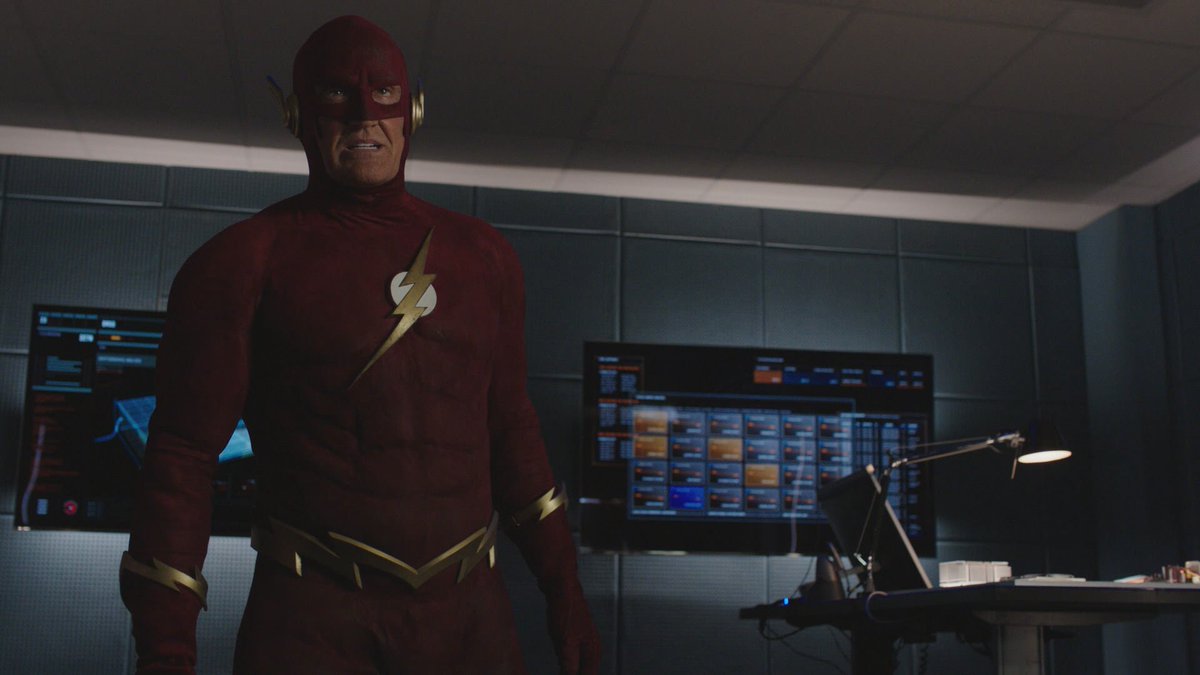
The upcoming DC/CW "Elseworlds" crossover has revealed John Wesley Shipp back in the crimson suit he wore for 22 underrated episodes in 1990-91! Feast your eyes on a scintillating still shot shared to Twitter by Marc Guggenheim - and marvel at how excellent the recreation still looks!


When The Flash debuted on The CW in 2014, it was bittersweet to see Shipp appear as Barry Allen's wrongfully imprisoned father. Until 2011's New 52 relaunch, fans knew and loved three generations of scarlet speedster! Star Grant Gustin didn't particularly evoke any established version of Barry Allen, so the potential for Shipp to reprise his matured role next to a new Kid Flash seemed like a real no brainer!

As new properties scramble to play catch-up with the established worlds of comic books, this kind of use of real-life existing history seems like the next logical evolution - a unique advantage! As if to continually drive home how obvious the concept would've been: Amanda Pays and Mark Hamill even reprised versions of their roles as Tina McGee and The Trickster. Which is about all the reference you really need to the old 1990 show.

The CW could've continued on merrily with a fresh premise similar (but superior) to what we got. It would've just become a more natural coming of age story, with an existing Flash playing mentor -- perhaps stuck in the Speed Force -- instead of that weird mangled version of Professor Zoom they pulled. Other references from the old show would've been available if needed.

The 1990 Flash series will no doubt live again thanks to streaming services, and fans should be prepared to find a similar style of television adaptation. Back then, TV was synonymous with second-rate when it came to superheroes and most genre fiction. There still wasn't a whole lot of precedent, and the constraints of budget and technology were a lot more strenuous than they are today.

Rarity was one of the reasons I was so excited in 1990, but under further scrutiny, the show does a palatable job of making the most of what it's got. For one: The Flash costume was presented to look pretty fantastic!. In fact, seeing Shipp back in the suit - I dare say he still puts the CW to shame!

The old show didn't do comic book villains much better, with classics like Captain Cold and Mirror Master succumbing to so-so stunt casting, and off-the-rack non-costumes. Every fan worth their salt had some grumbling to do, but got over it because of novelty, the awesome realization of The Flash, and the fact that the best episodes featured original crime capers and terrific sci-fi drama!

There was also a strong aesthetic of eighties-deco in Central City, inspired by Tim Burton's 1989 Batman, with bizarre painted murals punctuating just about every location. You really need to see these backgrounds to believe it. They're insane and awesome! You couldn't expect a new show to recreate the city and interior sets -- budget was one of the things that took the original show down -- but some sense of a gentrified version of Central City would've been spectacular. I digress...

I don't know what to expect from Shipp's return to the red suit, or if it's even worth further confusing matters. After all, he's also already been re-cast as Jay Garrick in another previous attempt to make better use of TV's first (recurring) Flash.

The Elseworlds banner suggests the fun won't last for long, but it's sure as heck enough to make The Flash our Hero of the Week! You'll be able to tune-in to the three-part crossover in December, with Entertainment Weekly reporting Part 1 begins Sunday, December 9th on The Flash. Part 2 is Monday on Arrow, and Part 3 wraps it all up with Tuesday's episode of Supergirl.

Friday, July 22, 2016

REVERSE-FLASH versus FLASH & MAX MERCURY
Flash Facts (DC)
Where:
Flash: Rebirth #4 When: September 2009
Why: Geoff Johns How: Ethan Van Sciver

The Story So Far...
Before this universe came to be, there existed an infinite array of Earths populated by super-powered champions. When life throughout the multiverse came under threat from a violent creature called The Anti-Monitor, one hero rose above all others to run his final race to stop the end of everything. That hero was Barry Allen - The Flash!


To the merged universe that was created after the Anti-Monitor's defeat, Barry Allen had given his life so that all may live! The legend of his sacrificed lived on in the legends of all the heroes he'd known, especially Wally West - who carried the torch of scarlet speedster into a new age as The Flash.

Only, when the New Gods fell to Earth and another crisis threatened reality, Barry Allen made his shocking return - alive!

In truth, Flash had become one with the cosmic phenomena called The Speed Force: the lightning that powers all speedsters! His return has mysteriously meant death for other runners bound by the Speed Force - a fact that forces him to return to the otherworldly dimension, where he will face another who has escaped death - Professor Zoom, The Reverse-Flash!

Tale of the Tape...
Strength: Draw 3 (Athlete)
Intelligence: Draw 5 (Professor)
Speed: Draw 7 (Light Speed)
Stamina: Draw 6 (Generator)
Agility: Draw 2 (Average)
Fighting: Flash 3 (Street Wise)
Energy: Max Mercury 3 (Explosives)


Super-villain royalty finally joins the ranks of the Secret Wars on Infinite Earths in today's feature fight! Professor Eobard Thawne is better known throughout the ages as Professor Zoom, the villainous Reverse-Flash!

Originally born in the 25th century, he was a scientist who idolized the Silver Age of super-heroes, in particular the museum memorialized 20th century icon: Barry Allen, The Flash! Adoration turned to resentment when the Reverse-Flash chose to use his speed powers to commit crimes, beginning his inversion as the counter opposite to the scarlet speedster!

By recreating the chemical bath that accidentally connected Barry Allen with his incredible powers, Professor Zoom gained comparable super-human speed and mastery over all that entails. He can move and react at unfathomable pace, endure harsh physical forces, manipulate his molecules fast enough to pass through solid objects, and even use his speed to travel through time!

We haven't seen Professor Zoom in action in past entries, but his successor Hunter Zolomon could be found buzzing in the background of Infinite Crisis #1 as a member of The Society. The nature of Zolomon's powers differ in that they are more specifically linked to time manipulation and displacement.

The Flash has clashed with many speedsters throughout his career, including, but not limited to: Savitar, Lady Flash and even the faster than a speeding bullet - Superman [Flash: Rebirth #3]! We know he can run in step with Professor Zoom, but can he take him down alone? He won't have to!

For every fast running nemesis, The Flash has a speedster to call a friend! Max Mercury is a whirlwind runner from the 19th century, whose early encounters with the speed force eventually led him to become a Zen guru of speed! His life's exploration of The Speed Force phenomena led him to befriend Jay Garrick in the 1940s, and later mentor Wally West in exploiting the fullest of his speed!

Are two speedsters better than one? You'd think so - but let's find out...

The Math: Max Mercury & Flash Ranking: Flash (#14)

What Went Down...
A dance of ghosts greets The Flash as he rejoins the blurring red haze of The Speed Force. The Reverse-Flash - buzzing with afterimages and crackling with red lightning. He didn't expect his nemesis quite so early. It hardly matters...


The yellow clad villain blitzes across The Flash and Max Mercury in the blink of an eye. The collision of his fist against their jaws leaves a ghostly snapshot in time -- a fleeting memorial of his lightning quick ambush!

The world has only recently learned Barry Allen is no longer dead - lost to the world in an act of self-sacrifice that kept him a part of the Speed Force. With his return to the energy phenomena, the scarlet speedster now knows of Professor Zoom's imminent resurrection. A broken neck no longer an end to his tyranny.


Flash tries to rush his enemy, but catches only a fading image. Zoom is already behind him, stabbing through his arm with a lightning tipped baton! He leaves it there - dashing to overwhelm Max Mercury with an onslaught of punches!


Zoom is tapping into a negative Speed Force, cutting through the positive like a cancer - or the jagged lightning rod he left inserted in The Flash's arm.
The zig-zag bolt does as much damage coming out as it did going in. Flash cries in agony! Professor Zoom simply cries foul - admonishing Flash for the heroic legacy he left when he seemingly died stopping Anti-Monitor and his cannon.


Spiteful Thawne keeps Barry off balance - rushing him down with another super-fast flurry of fists! Then he assaults the Flash with a revisionist history - a grand plan to undo his legacy by bringing the hero back from the Speed Force!

Flash regroups with Max Mercury by his side, both under attack from the infectious red lightning of Reverse-Flash's Speed Force. He prepares another attack, but the impurity is too great. Zoom's force is too fast!


The sneering grin remains as Flash's hands clutch for a throat that's no longer there. Just a haunting image - fading, as Professor Zoom leaves the dimension of speed to complete his plot for revenge. If Flash won't infect his friends, Zoom will kill them himself. The starter's pistol to a race of life and death!

The Hammer...
It was a fight that ended with a threat, not a knock-out. Yet Professor Zoom ran rings around the heroes, and left them bleeding behind him as he set out to fulfill his wicked designs.

For those overwhelming reason - we must call this a villain's victory! To the matter of attacking The Flash at the very core of his heroic legacy -- that's a subject up for debate...

Throughout the month of July we've been discussing various points in history when DC Comics has invoked a "Rebirth".

In 2016, they're trying to put back the things they lost during their line-wide reboot: The New 52. It's similar to the predicament found in 2004's Green Lantern: Rebirth, which worked to restore the besmirched legacy of Hal Jordan, and bring back the definitive mythos of the Green Lantern Corps.

Green Lantern: Rebirth, also headed up by writer Geoff Johns and artist Ethan Van Sciver, found itself at a very similar juncture at this point, but heading in a very different direction.

Issue #4 revealed once dead nemesis Sinestro was alive and well, himself reborn, and directly connected to a polarized impurity infecting heroes. In Flash: Rebirth, it's the negatively charged red lightning of Reverse-Flash's Speed Force. In Green Lantern: Rebirth, it's the yellow weakness in power rings, now known to be a vein of fear spread by the spectrum entity Parallax.

Both stories use this villain's power source to infect heroes, and make them a danger to their family in earlier issues. By issue #4, both launches the reborn nemesis into a two-on-one face-off against a pair of heroes. For a better parallel to the Kyle Rayner & Green Arrow team-up we featured last week, there's the mentor & next generation team-up of Jay Garrick and Bart Allen that Professor Zoom runs into immediately after this skirmish. The similarity ends there.

It was easy to get on board with Green Lantern: Rebirth. It fixed something that was clearly broken. Hal Jordan's fall from grace in the mid-nineties, and career thereafter as the super-villain who murdered the Corps, never sat right. Even with the creation of a perfectly adequate replacement (Kyle Rayner), there was no real denying that something significant had been lost. The DCU was smaller, and the Silver Age Green Lantern's legacy not what it should be when he was finally killed off in a half-hearted attempt to redeem him.

Barry Allen never had that problem. Yes, he'd been tainted by murdering the Reverse-Flash, but he was still the same hero he always was, conflicted in his lethal act. Thus, just as its told in Rebirth, the legend of the Silver Age Flash only grew with his demise. His sacrifice in Crisis on Infinite Earths #8 was poignant and well told. A cosmic predicament only he could solve. A death worthy of an icon, told in an important landmark maxi-series, responsible for the Rebirth of the entire DC multiverse!

Unlike the Green Lantern story, 2009's Flash: Rebirth had nothing to fix. The hero's death wasn't a mistake. His mythos - as stronger as ever! "Kid Flash" Wally West had quickly transitioned into the mantle of his dead senior. There would be plenty of times to miss the Silver Age Flash, but his modern successor was easy to accept. For over twenty years, he was The Flash, expanding upon the role as a multi-media icon, and the shining example of a legacy hero.

So, was the return of Barry Allen a victory - or a defeat?

I like the way these meta-textual questions play directly into the fiction of the story itself. If the series must happen, that's a very worthwhile idea to explore through the characters -- even if the end goal is never to answer the question.

For better or worse, Barry Allen would end this series as The Flash. (In truth, he'd already returned a few months earlier, in the pages of Final Crisis). His legacy would not be that of a selfless hero who sacrificed himself to save the universe. The DCU would not move forward. Wally West would continue to be The Flash, but became irrevocably lost in the shuffle, to eventually be jettisoned two years later when someone decided it was a good idea to rubbish the entire universe -- The New 52 reboot. [For more, see; Hero of the Week: Flash].

As a long time reader, I have an undeniable affection for the Silver Age heroes. Barry Allen was The Flash I knew and loved in some of the earliest comics I read. How could I not enjoy his return? Yet, I cannot ignore the conflict it creates with all that was spawned from twenty-plus years of Wally West! If Green Lantern: Rebirth was created to bring something back - Flash: Rebirth was created to take something away. Which seems like such a shame.

Sadly, our run through past DC Rebirths is also almost at an end. If you haven't read Flash: Rebirth and want to know more, take advantage of the Amazon link provided [to the right]. You can also find many more featured fights from Rebirths past by diving into the Secret Archive!

For a special fifth week our month of Rebirth goes back to where it began to take another look at a post-Crisis battle from the pages of Legends! Don't miss it!

Winner: Professor Zoom
#290 (new) Professor Zoom
#15 (-1) Flash (Barry Allen)
#794 (new) Max Mercury

Friday, June 24, 2016

BATMAN versus JOKER
Time and Time Again! (DC)
Where:
Crisis on Infinite Earths #2 When: May 1985 Why: Marv Wolfman How: George Perez

The Story So Far...
As the barriers of time and space blur into insignificance and cosmic forces conspire to shape reality; a night in crime ridden Gotham City appears like any other...


A spate of murders have Batman on the hunt for a brazen killer. The last victim's appointment book: containing a vital clue that points to Plymouth Films and their next big production - Captain's Hill.

The movie title points to the resting place of one Miles Standish, whose last descendent holds the multi-million dollar rights to silent comedy films. As death lingers in the air, Batman races to stop The Joker from claiming his murderous prize -- unware he's a step closer to solving an even bigger mystery!

Tale of the Tape...
Strength: Batman 3 (Athlete)
Intelligence: Batman 5 (Professor)
Speed: Batman 3 (Athlete)
Stamina: Draw 5 (Marathon)
Agility: Batman 4 (Gymnastic)
Fighting: Batman 5 (Martial Artist)
Energy: Batman 4 (Arsenal)


It's a story called "Time and Time Again" and it perfectly encapsulates the battle we have before us! There are over 820 ranked characters from ten years of Secret Wars on Infinite Earths -- and no two of them have met more frequently in featured fights than The Batman and The Joker!


The two most famous encounters come from The Dark Knight Returns #3 and Batman #614. Both stories show Batman overwhelmingly triumphant in the physical domain, but compromised by the Joker's unrelenting assault on the psychology and morals of The Dark Knight Detective. The hypothetical future of Dark Knight Returns frees the story to end in Joker's self-inflicted death, while the canon plot of Hush sees a Batman contemplating the finishing blow - but ultimately saved from his own anger by Commissioner Gordon.

More frivolous examples come from Detective Comics #781 and Justice League of America #15. The stakes of these stories are less dire, the themes less bold. These are the passing encounters of the superhero and super-villain: arch-nemeses destined to meet episodically ad infinitum. The Detective Comics fight is a personal favourite - a snow covered prison brawl between inmate Joker and his looming interrogator.

The JLA issue is more about The League fighting their Unjust counterparts. Batman appears as a monolithic shadow over an unconscious Joker. An off-panel reprisal of the same old story, flippantly punctuating the action with the benefit of a common understanding -- Joker is no match for Batman.

Of the seven fights featured in the past, Batman has won all seven.

In the animated series episode Christmas With The Joker, and in the Academy Award winning performance by Heath Ledger in The Dark Knight, multimedia canonizes the mismatch on film.

In the cartoon, Batman's adventures have alluded to his life's training in the martial arts under the great masters of Japan. His past haunts him in battle with deadly ninja. In 2005's Batman Begins, the determination of a young Bruce Wayne again leads him far East, where he is indoctrinated into The League of Assassins, and again demonstrates intense learning of deadly martial arts.

The competitive match-up of the modern super-ninja and his clownish lightweight nemesis isn't especially compelling, but the dynamic of their seventy year arch-rivalry is evergreen! It's steeped in psychology and circumstance, and has been interpreted a great many ways over the decades.

Joker has relied on weapons, traps, musclebound henchmen, chemistry, anarchy, misdirection, and Batman's capacity for selflessness to elude capture, or eke out occasional victories. Batman is always triumphant in the end. Who would win? The real question is - what went down? Let's find out!

History: Batman (7-0-0)
The Math: Batman Ranking: Batman (#1)

What Went Down...
As cosmic dominoes topple beyond, a dark night falls over a solitary mansion on a secluded hill. The night air is cut by the sound of murder! The grinning victim's provocation: Estate inheritance of comedy rights possessed by millionaire silent film owner, Harold J. Standish III. The Joker is getting into the movie business!


The plot comes with a killer twist in the Third Act: A heroic entrance for a Dark Knight Detective whose dogged analysis of clues has led him to Joker's final victim! The Batman smashes through a nearby mansion window - launching himself at the unsuspecting Clown Prince of Crime!


A gloved fist collides with Joker's ghastly grin, sending him to the ground with a single right hand! Surprised, but not unprepared, Joker compliments The Batman for his unwavering abductive reasoning -- dousing him in adhesive sprayed from a novelty flower gag!

Covered cape to cowl in copious amounts of the restrictive goop; Batman drops to his knees and struggles to reach for solvent stored in his trusty utility belt!

As he does, the cackling clown twirls the .45 caliber pistol he already used to kill Mr. Standish, promising a remedy for Batman's stiffening joints. Things look dire for The Dark Knight -- but then something very unexpected happens!..


Without warning - The Flash appears!

Arm out stretched, the Scarlet Speedster cries out for help! His apocalyptic plea falls on deaf ears as The Joker, panicked, points his gun and begs for clemency.

The crime clown sees conspiracy between the Central City Speedster and his usual Gotham City sparring partner. Looking for a way out, he fires wildly with his pistol - and then goes for the super-adhesive. A batarang cuts him off!


Batman looms over The Joker as the chemical reaction between solvent and glue surrounds him in smoke. It seems the day is won, but again, the ghostly vision of The Flash speaks desperately of the world dying around him!

Distracted by the bizarre re-appearance of The Flash after he'd been missing for some time, The Batman allows Joker to make a mad dash for the exit! There are forces far greater than crime and law at play. A crisis on infinite earths!

The Hammer...
What started as just another battle between hero and villain ends as something very different! Batman had the upper hand, but The Joker got away. They both got a few good licks in. For the purposes of The Comic Book Fight Club we're calling this one a draw -- but the fight is only part of the story.

Playground lore always had it that Batman was remarkably uninvolved in the cosmic reorganizing of the Crisis on Infinite Earths. It's certainly a far cry from the stories that came in the years and decades that followed!

By the time of Final Crisis (2009), major plot points were revolving around a Batman whose tactical and fighting brilliance made him equal with gods! Ironically, it's through the similar vision of controversial Batman v Superman: Dawn of Justice, that many fans are waking to Batman's brush with the Crisis.


The foreshadowing of Flash's ultimate fate is a classic comic book moment!

Even read with foreknowledge of the series; the way the initial Flash vision intrudes upon a familiar status quo is sudden, unexpected, and drenched in apocalyptic foreboding! With any luck, you may have even been stunned by The Flash's sudden appearance while making your way through this very article.

The Flash's story is certainly one of the strongest in a maxi-series defined by its chaos. The future echo of unclear significance, but it sets a suitably ominous tone for the epic that unfolds. The true horror of Flash's ghostly appearance won't become certain for another six issues. Crisis on Infinite Earths #8 closes the loop, confirming every earlier dread with spectacular results!

In Dawn of Justice, Ben Affleck's Batman experiences "knightmare" visions of a dream world in ruin. Flash appears in the dream to warn of what seems to be an apocalyptic future influenced by Darkseid and an evil Superman. Its function of foreboding is effectively the same, but its position is the opposite -- a threat to a cinematic universe yet to be assembled. A much simpler preposition than the end of multiple universes created over several decades.

It was thanks to Crisis on Infinite Earths that we, the modern readers, had the luxury of a densely populated singular DC Universe. Acting as a deconstruction and construction of superhero existence, the series is undoubtedly significant, but it's also unruly and unfocused throughout. Sifting through dense pages of the end of the world can be a lot of fun, but may not make the best first impression for a movie-going audience conditioned to expect streamlined tales.

It helps that the "pre-Crisis" multiverse was essentially defined by the dispersal of characters across different worlds. This isn't a series inundated with repeating counterpart versions of one or two characters. The worlds may not be in sharp focus, but their peril is clear, told through the scrambling of dozens upon dozens of individually familiar heroes.

The scattershot nature of the action isn't especially favourable for a blogsite built on quantifying superhero exhibition bouts, but I'm excited about going beyond the concise for future installments. Superhero comics have always been at their best, I think, when they can be read and dissected in different ways.

Those future feature fights can be found by following the Crisis on Infinite Earths tag, or by scrolling alphabetically through the Issue Index Archive! There you'll find hundreds of other featured fights from Infinite Earths! This past Monday's Hero of the Week also concerned the legacy of Crisis on Infinite Earths and may be of interest!

If you've had enough of reading about the seminal maxi-series and finally want to take the plunge, you can do so by using the Amazon purchase link provided for your convenience [right]. Doing so helps keep the secret wars infinite. You can also help by sharing relevant links around the web!

All willing, The Comic Book Fight Club will continue in July with a special focus on what happened some of the other times DC Comics decided it was time for a rebirth. Some of the results may surprise!

Winner: Draw
#1 (--) Batman
#359 (--) Joker [+1 kill]
#14 (--) Flash (Barry Allen) [+1 Assist]