skip to main |
skip to sidebar
 GREEN LANTERN CORPS/JUSTICE LEAGUE versus SINESTRO CORPS
Birth of the Black Lantern (DC)
Where: Green Lantern #25 When: January 2008
Why: Geoff Johns How: Ivan Reis
The Story So Far...
The Anti-Monitor - a creature of immense power that once sought to destroy the multiverse - joins Sinestro in creating a new Corps of agents, with the intent to use them as heralds of his conquest over the positive realm. Harnessing the yellow power rings of Qward, the Sinestro Corps operate on a design of fear, using it to control their yellow energy the same way the Lanterns us willpower.
Tricked into believing the Sinestro Corps were to attack Oa, the designates of Sector 2814 soon find themselves four against an army, as the Anti-Monitor and his heralds emerge in the Milky Way. They launch their attack on Earth, but the rest of the Green Lanterns, along with heroes native to the planet, soon join the war. The Justice League, Justice Society, Titans, and more, rally to join the Green Lantern Corps in a stand against a force determined to seek the destruction of all.
Tale of the Tape...

 Strength: Wonder Man 6 (Invincible)
Intelligence: Iron Man 5 (Professor)
Speed: The Sentry 6 (Mach-Speeds)
Stamina: Iron Man 6 (Generator)
Agility: Spider-man 5 (Cat-like)
Fighting Ability: Ares 7 (Warrior)
Energy Power: The Sentry 7 (Cosmic)
 - The Green Lantern Corps is: John Stewart, Guy Gardner, Kilowog, Arisia, Breeon, Adam, Soranik Naru, Princess Iolande, Bzzd, Green Man, Torquemada, Voz, Apros, Brik, Tahr, Kraken, Chaselon, Sir Deeter, Leezle Pon, Lok Neboora, Raker Qarrigat, Salaak, Stel, Isamot Kol, Larvox, & Vath Sarn.
With: Superman, Powergirl, Hawkman, Alan Scott, Martian Manhunter, Wonder Woman, Metamorpho, Firestorm, Wonder Girl, Raven, Red Tornado, Captain Marvel, Batman, Starman, Supergirl, Hawkgirl, Plastic Man, Starfire, Bulleteer, STRIPE, Black Lightning, Red Arrow, Firehawk, Miss Martian, Jay Garrick, Nightwing, Creeper, Cyborg, Black Canary, Green Arrow, Robin, & Steel.
Having succumbed to the effects of the Parallax entity; Earth's most famous Green Lantern, Hal Jordan, would lead a grief stricken rampage against his fellows in a bid to gain power enough to resurrect his obliterated city.
At the cost of the few survivors, the Guardians of the Universe would pool their energies to create one final, immensly powerful ring, which would be sent out into the universe with the last surviving Guardian from Oa; Ganthet.
The ring would come to be the inhereted by Kyle Rayner.
The young graphic artist's imagination would make him an ideal recipient, his creative mind opening up a realm of possibilities to the ring's powers of solid manifestation. These iconic Green Lantern powers would come to Rayner with the added responsibility of being the last of the Corpsman - a footnote that would continue to be a part of his education right until the return of the Corps.
- The Sinestro Corps is: Anti-Monitor, Cyborg Superman, Superboy-Prime, Karu-Sil, Haasp the Hunter, Snap Trap, Despotellis, & Yellow Lantern.
While imprisoned in the Central Battery of Oa; former Green Lantern, Sinestro, came in contact with a creature as old as time itself. Parallax, an entity born of fear, had been imprisoned by the Guardians of the Galaxy and consequently instilled in the rings of the Lanterns an impurity that left them vulnerable to objects of yellow -- the colour of fear in the cosmic emotional spectrum.
When Hal Jordan was able to excise the corruption of Parallax from his soul, a freed Sinestro opts to form a new army in the anti-matter universe of Qward. Armed with yellow rings inspired by fear, he summons the most frightening villains from across the universe, joining together to form the Sinestro Corps.
Among Sinestro's most famous early recruits: Superboy-Prime, Cyborg Superman, Amon Sur, Mongul, Fatality, Parallax, and the Anti-Monitor.
Math: Green Lantern Corps Ranking: Batman (#1)
What Went Down...
The Earth plays host to three cosmic armies as the Justice League and other heroes combine with the Green Lantern Corps to resist their fear-wielding counterparts, the Sinestro Corps. At the centre of the melee, the armored giant of destruction - the Anti-Monitor!
 From a distance the war is abstracted, appearing as a mass of wills colliding, but on the frontlines the personal struggles make-up the bigger picture. Among the heralds of the Anti-Monitor is Hank Henshaw, the Cyborg Superman that welcomes the lethal force initiated by the Guardians that oversee the Lantern Corps. He provokes their action, crushing the will of Lanterns beneath his cybernetic hand, while burning the wings of the courageous Hawkman.
John Stewart uses his ring to douse the flames as he and Guy Gardner arrive to join their comrades. They are immediately greeted by the venom of Karu-Sil, one of Sinestro's fear mongers. Gardner retaliates against her parallax constructs, generating a swarm of glowing green wolverines.
In the skies above, the Anti-Monitor looms over a city in chaos, plunging his fist into the street with the aim of sucking the planet dry. A wave of energy expands, positive matter turning to anti-matter, threatening to incinerate anything unable to flee it's path. The destruction forces Lanterns to redirect their attention to the innocents of New York City, to whom the wave is the most immediate threat.
Heroes such as Wonder Woman and Plastic Man join Lanterns, such as Arisia and Kilowog, in the desperate rescue.
Two brands of Manhunter collide as Hank Henshaw's cyborg meets the fist of the last lawman of Mars - J'onn J'onnz! His intervention aids John Stewart, who carries the ailing body of Guy Gardner. Yellow blood spits from the sickened Lantern -- a sign of Despotellis, the viral Sinestro, attacking him from within.
 Meanwhile, heroes such as the Red Tornado, Starfire, Red Arrow, Black Lightning, and Firehawk do their bit to battle the swarming Sinestro Corps. They buzz and battle around the Anti-Monitor like insects, but each of their blows decides the fate of not only this Earth, but every parallel world that stems from it!
The Anti-Monitor's destructive conversion of energies goes unchallenged, until voices from the void recall the crisis incurred by his last attack on reality. A crisis of infinite Earths that went unchallenged by Oan Guardians in bondage.
Oan Guardians who will not stand idly by as he threatens existence anew!


 The Guardians funnel their green energies at the impossible beast, confident in the knowledge that this Anti-Monitor is not yet fully developed beneath the armor that connects him to the old. Their will slams against the Anti-Monitor's shell and tears and shreds at the metal of his robotic heralds, the newest Manhunters. Their captain, Hank Henshaw, remains unphased by the Guardians' power.
Baring a grudge for their role in imprisoning him during Alexander Luthor's attempts to affect reality; Superboy-Prime blasts at the Guardians with his Kryptonian heat vision, while fighting off the advances of Alan Scott, Wonder Girl, and the Lanterns. Anti-Monitor lashes at the immortal Guardians also, trapping one in a giant fist that singes blue flesh with raw anti-power.

 On the ground, John Stewart fends off the bizarre advances of the Yellow Lantern, while the increasingly weak Guy Gardner turns his attentions skyward. There, looming above the Earth, is the construct called "Warworld" affixed to the yellow central battery of the Sinestro Fear Corps. A power source big enough to destroy the Earth, or, if contained, one giant Anti-Monitor.
Even as his insides are plundered by the microscopic Despotellis; Guy Gardner pledges himself to the cause, flying into the sky with his ring blazing, forming chains with his fellow to drag the Warworld battery into position.
 Other Lanterns rush to aid their brothers, fending off the opposition of Sinestro's agents. With the Guardians doing their part to rupture the Anti-Monitor's armor, the Lanterns toss Warworld toward the New York City streets below, and prepare themselves for the mammoth task of containing the explosion.


 Kilowog, Apros, Brik, Salaak, Bzzd, Isamot Kol, Arisia, Torquemada, Sir Deeter, and many other Green Lanterns, all focus their energy into a giant dome over Warworld and the Anti-Monitor. Hank Henshaw is also encased within. With a cold metallic hand pressed to the edge of the translucent green dome, he whisper thanks to the Lanterns, poetically anticipating his long overdue death.
 While the heroes of Earth fend off the advances of the Sinestro Corps; the City trembles as Warworld explodes, obliterating Hank Henshaw, and massive portions of New York, with it. The Anti-Monitor emerges, however, with his armor in tatters, but his resolve in tact. He lashes out at the unsuspecting Lanterns, but finally his undoing comes from an unlikely source, one of his allies, Superboy-Prime!
The impetuous youth pierces Anti-Monitor's armor and body with a torpedo-like dive. No longer interested in the Anti-Monitor's attempts at conquest, he puts an end to the creature's rampage, dragging the tattered armor into space, before tossing the smouldering corpse of the Anti-Monitor toward a dark destiny beyond the stars.
Spattered with blood, Superboy-Prime prepares a renewed assault against the heroes of the universe. His tantrum is but a precursor to the true end of the Sinestro Corps War...

 The Hammer...
In the interest of clarity, this is technically part one of a two-part scenario. The battle strings out to include the suggested fight against Superboy-Prime, but to save time and my sanity, I've broken it up.
For defeating Anti-Monitor (and Hank Henshaw) we declare Superboy-Prime, Guardians of the Galaxy, and the Green Lanterns mentioned who affected and contained Warworld's destruction. For their involvement in repelling the other Sinestro Corps forces, and contributing to varying degrees in the specifics of this fight, we also award a victory statistic to the Earth heroes identified in "the tape". Their involvement, while non-specific, is clearly vital to the victory of the Green Lantern Corps.
For a final piece of house keeping, we also acknowledge confirmed kill stats to Superboy-Prime and Anti-Monitor, who both claimed two lives. Other instances prove too uncertain to confirm a death. Whew.
As you might have noticed, we might be a few weeks behind, but we've assembled some epic battles for the last month of 2008! Following on from last week's symbiote bomb [New Avengers #36], we give you yet another early 2008 major battle you might have been unaware of! True to the name of the site, these epic secret wars involved the heavy hitters of both universes, but neither expanded line-wide like the lynchpin events - Secret Invasion and Final Crisis.
Despite occupying only GL-related titles, it's fair to say Sinestro Corps War went quite a bit larger than the brief symbiote plague in our other example. In fact, reflecting on the year that was 2008 is almost impossible to do without mentioning spillover from the Sinestro event. Even now, looking forward, we anticipate the event forecasted at the end of this issue - Blackest Night!
The upcoming Green Lantern event is but one of several key pieces making up the connective tissue that is the DC Universe. The heavy editorial direction cast across the company has earned criticism from fans and commentators alike, but has also ushered in an undisputed era of cohesion for the DCU. While the heady excitement of the 52-era seems to have passed, DC still manage a tight ship of concept and causality. Reading DC comics has become describable as an experience, distancing them from the hit-and-miss disconnection of Marvel's high selling, headlining events.
What this overly verbose assessment leads to is, Geoff Johns.
At first glance the writer appears to possess few special powers, but anyone reading DC comics knows how deceptive his approach can be. The Sinestro Corps War encapsulates the growth that the Green Lantern comics have experienced under the writer, benefitting not only from brand new contributions, but also the expert inclusion of ideas pulled from all the eras. It's a balance of ideals that has made DC the creative powerhouse -- competent in the face of adversity, creative while traditional.
The simplicity of the spectrum of emotion and colour to represent other Lanterns turns what could easily be a dismal concept, into something beautiful. The Rage of the Red Lanterns serves as one of the prologues to The Blackest Night, and is one of the beats we will hopefully talk more about in 2009.
I'd love to find the words to go deeper into this issue, but we're fast losing days in the year. Instead, let the this and the previous entry reveal where the Infinite Wars has come to rest at the end of the year. DC has been superb. In the new year I hope to talk more about Final Crisis, which has also been a series I've been quite impressed with, in stark contrast to Marvel's Skrull-event.
In case you missed it; be sure to check out our last review of this issue, detailing the personal battle between Sinestro, Hal Jordan, and Kyle Rayner. We will no doubt return to this epic issue at a later date for more of the Sinestro Corps War and the Superboy-Prime fight.
Next up, we tackle two of the major events that drove action on the Infinite Wars in 2008! First, I have to tag all these bloody Green Lanterns!
The Fight: 6 The Issue: 6
The complete Sinestro Corps War is available split across two Green Lantern trade paperbacks. You can pick them up at an affordable price via Amazon, and by using purchase links provided, also help sponsor the efforts of the Infinite Wars! Those, plus collected editions of most issues reviewed in the Secret Archive, are also available via the Infinite Wars Amazonian Gift Shoppe. Perfect for ringing in the new year!
 JSA versus SOLOMON GRUNDYOut Of Time: Part 1 (DC)
Where: JSA #65 When: November 2004
Why: Geoff Johns How: Don Kramer
The Story so far...
During the Golden Age of superheroes in the forties, many of the heaviest hitting heroes united to form a powerful syndicate of heroism called the Justice Society.
While the team recovers from their defeat at the hands of former ally and new ruler of Khandaq, Black Adam; they enter into a battle against time as Rick Tyler lies dying in the Timepoint: A place in space that will exists for only an hour's worth of external reference.
While the android Hourman from the future does his best to aid the original Hourman, Rex Tyler, and Dr. Mid-Nite in saving Rex' son; the rest of the Justice Society must respond to another rampage by the undying creature called Solomon Grundy!
Tale of the Tape...

 Strength: Powergirl 6 (Invincible)
Intelligence: Mr. Terrific 5 (Professor)
Speed: Flash 7 (Lightspeed)
Stamina: Solomon Grundy 6 (Generator)
Agility: Sand 7 (Unlimited)
Fighting Ability: Hawkgirl 6 (Warrior)
Energy Powers: Green Lantern 7 (Cosmic)
- The Justice Society of America are: Green Lantern, Flash, Dr. Mid-Nite, Stargirl, Hawkwoman, Mr. Terrific, Sand, and Powergirl.
During the Golden Age of superheroes in the forties, many of the heaviest hitting heroes united to form a powerful syndicate of heroism called the Justice Society.
Among the well-known founding members were; Flash, Green Lantern, Hawkman, Sandman, the Spectre, Dr. Fate, Hourman, and the Atom.
Despite an ebb and flow through time that has seen the team maintain varying degrees of activity, they have endured to the modern day. Extending the JSA's lifespan is a new "legacy" policy which allows the inclusion of new members related to former members, by blood, or by inheretence of power.
 - The true origins of Solomon Grundy are unclear, but it is widely believed he is the spirit of wealthy merchant, Cyrus Gold, who is said to have been murdered in the late 1800's and dumped in Slaughter Swamp. Rising from the marsh, Grundy becomes an undead force that would come to menace Batman, Green Lantern, and both the Justice Society and Justice League.
Grundy possesses superhuman strength and endurance, and a penchant for returning from even the most fatal of scenarios. His personality is seen to shift after many of these lethal experiences, usually with minimal higher brain functions, reducing him to a lumbering and disgruntled monster.
Due to his marshy origins at Slaughter Swamp, Solomon Grundy has been seen to possess the ability to negate the Green Lantern's ring by way of it's weakness for things made of wood. This is presumably due to the bark and debris from the bog that saw his formation.
The Math: Justice Society Ranking: Hawkwoman (#84)
What Went Down...
While Rex Tyler reunites with the android Hourman in order to save his son's life in the Timepoint, a majority of the rest of the team is in Central Park, New York, where Solmon Grundy has returned for another rampage.

 Grundy's old foe, the Green Lantern, attempts to talk the rampaging monster down. Grundy responds by wrenching a tree from the ground, using it to capitalize on the Green Lantern ring's only weakness -- wood!
Having already flung the rest of the team around with his brute strength, Grundy grabs Stargirl by the ankle, taking her as a pleasant trinket for future use.
Sand emerges from the battlefield, coming to Stargirl's rescue with a harpoon gun, which he fires with expert marksmanship, shooting it into Grundy's open mouth.
 With Grundy anchored, Sand stuffs his sleepgas gun in the monster's mouth, letting the paralyzing gas seep directly into his maw. The notoriously powerful Solomon retaliates quickly with an overhand blow that sends a quake through the earth.
 Sand recovers swiftly, turning his own earth-manipulating powers to a similar offensive, sending a focused tremor into Grundy's immediate vicinity. The move is sufficient to level Solomon Grundy, putting an end to his warpath.
 The Hammer...
We come into this fight with the action already underway, so I'm going to give the benefit of the doubt to the rest of the team and assume they were of some assistance, but Sand gets full credit for another Solomon Grundy defeat. One of many that have been sitting in my go-to pile for quite some time.
It's just now dawning on me that this is going to be a very short entry. That's maybe a convenience since I'm trying to maintain daily updates through February, and that can get tiring, but on the other hand, I like to draw some sort of quantity-based distinction between normal entries, and quick fixes.
 I'm not sure it really matters. DC coverage has been something that's demanded attention here on the Infinite Wars, and the JSA characters were among the most glaring omissions from the first two years.
Over the past five years I've probably enjoyed DC's creative directions far more than Marvel alternatives, despite some historic sense of loyalty to the House of Ideas [showing up in the Marvel bias on the Infinite Wars].
He appears quite regularly in our DC representation and it takes but a glance at the top ten creators to recognise that Geoff Johns is one of the most dominant writers to contribute to the big two over the past few years. His work on titles like Hawkman, Flash, and of course, JSA, made up a sizable portion of my conversion to the DC Universe, making good use of a wide variety of historical references in each.
If One More Day is the current measure of the very worst possibility; then Johns' talent for appreciating and utilizing characters that might otherwise be dismissed, succeeds in ever way OMD didn't. Likewise, new characters, particularly extensions to the JSA legacy, are a very positive feature of Johns' crafting of the brand even in current 2008 issues.
It sounds like naive arrogance to say I have an "affinity" for the Golden Age characters, but there are certainly a lot of characters I'm very fond of. Sandy Hawkins, featured here as the uber-Sandman successor, is one of those great I wish we could see more of, because if there's a flaw in the JSA model, it's the sheer number of characters!
I haven't had an opportunity to check out JSA: Classified, but without estimating the quality of the stories, it's a great opportunity to showcase these fantastic characters! I wouldn't want to call them under appreciated, given the success the JSA title attained around this issue, and the core influence the characters have had in the DC Universe. That might have cooled off a little as books like 52 push the successes of more modern characters, but that influence is still there.
I've really enjoy the intergration of these characters into other well associated corners of the DC Universe. Characters have mentored others in combinations both obvious, and inspired. Jay Garrick joins the speesters of the Flash; Alan Scott's association with the Green Lantern has grown, despite being notable for not being part of the Corps; Mr. Terrific succeeded Alan Scott as a leader in Checkmate; and Wildcat has been intergrated into Catwoman's corner.
JSA, even more so now, sort of embodies DC's great strength.
They've killed Superman and they've broken Batman's back, but a few black times aside, DC are the company that don't throw anything away. The company and it's properties seem endear that respect, and even if it's commanded by over zealous editorial edicts known for their interruptions, it's worked in the long run.
This reverence is seen throughout Johns' growing catalogue, and I suppose his relationship with DC is a big part of what's made him an industry powerhouse.
I've just remembered that there was another reason I wanted to talk about this issue, and it actually connects with Johns' current work on Booster Gold.
We've seen in the past that resonance between projects is not only possible, but likely. Johns maintains a consistency throughout his work that contributes a sense of reality to the universe in which he works, and JSA establishes a lot of rules and conceits of the way he treats time travel. That's not to say Booster Gold won't form it's own thesis dependent on the requirements of a story, but here, dealing with the Timepoint created to give Rick Tyler one hour with his father before he dies fighting the villain, Extant.
Though not pertinent to the feature fight, I have to lament on the central story, which sees a concession granted to time travel that references writing in fiction. Because, as Rick and Rex Tyler soon learn, an Hourman dies fighting Extant, but much like a well written retcon, it depends only on dressings and appearances.
Just to spoil the story for you, Rex Tyler returns to active duty with the JSA when he is replaced by an alternate who only appears to be Hourman. Food for thought for those reading Booster Gold, where Booster has been told he cannot save Blue Beetle due to the inevitabilities of time and space.
We talked a lot at the end of 2007 about the importance of reflecting contemporary movements on the Infinite Wars. The tenuous connection this issue has is the current issues of the relaunched Justice Society of America, which currently sees Johns reaching the epitomy of his use of history, drawing upon the alternate Earth from the Kingdom Come universe! Featuring those issues, or reviews of Kingdom Come, would be the obvious thing to do, but as a cash strapped reviewer, that isn't very likely.
Actually, y'know, I don't want to cast aspersions about the status of our humble blogsite, but you know what would be cool? Imagine if DC and Marvel were to get behind the notion of a fighting sports league of their characters and added me to the 'review copylist' to deliberately sponsor their characters. I'M JUST SAYING -- that would be cool. And it's not like I'm not doing my part to sell the stuff... DC, Marvel... Come and find me!...
I had a looong night, readers. This post is hitting turbulence that threatens to throw it completely off the rails, and self-referencial claims to review copies are probably the epitomy of that. I should probably wrap things up before I start weeping about lost loves!
The Fight: 4 The Issue: 5
Finding yourself looking for a jumping on point? JSA is available in a wide series of trade paperback collections, and while this might not be the ideal starter, it's going to give you a crash course introduction to the Hourmen! I'd be very surprised if you didn't find yourself attached to them after this story! The trade contains this, and the following story.
Head over to Amazon where you can buy this, and many other trades, all while supporting Secret Wars on Infinite Earths (if you use the provided links to PURCHASE)! Amazon: it's not just for the ladies! Yay!
 THE SOCIETY versus POWERGIRLThe Survivors (DC comics)
Where: Infinite Crisis #2 When: January 2006
Why: Geoff Johns How: Phil Jiminez
The story so far...
Long ago there was a crisis that threatened existence across dimensions. The champions of the multiple Earths opposed the existential threat, and through their triumph came a rebirth of reality, and a merged existence.
A select few survivors from worlds before the crisis were able to escape to a life exclusive to the redefined reality that was unfolding, some infiltrating the new central Earth with no memory of all that once was.
They were the likes of Powergirl and Psycho-Pirate, and they integrated into their new lives well, but such was not so for the refugees in non-space. Trapped in the crystaline universe they had made for themselves, they were forced to watch as life evolved in a very different, darker way, and their ideals were betrayed. Able to take it no more, these super forces take full advantage of unfolding instabilities, and reemerge to shape the worlds again...
Previous Form:
The Society [#20]: The Society represented an army of villains united, led by Lex Luthor, who used the fate of Dr. Light as a scaremongering motivator.
Powergirl: Making her overdue debut in the Infinite Wars.
Tale of the tape...

 Strength: Mr. Atom 6 (Invincible)
Intelligence: Giganta 5 (Professor)
Speed: Powergirl 5 (Super Speed)
Stamina: Powergirl 6 (Generator)
Agility: Clayface 7 (Infinite)
Fighting Ability: Powergirl 3 (Street Wise)
Energy Powers: Powergirl 5 (Lasers)
 - This particular collective representing The Society includes; Psycho-Pirate in a leading role as a core member of the villainous cartel, with the muscle-bound team of Clayface, Giganta, Mister Atom and Girder assigned to capture Powergirl.
- While the majority of the team represent super strength, Psycho-Pirate is a much less offensive character. His powers revolve around the Medusa Mask, which can influence and amplify the emotional state of most targets.
Rare exceptions of exceptional will-power have been shown to resist the effects of the mask, such as Black Adam. [Infinite Crisis #6]
- Infinite Crisis served to clear away a garbled history, reinstating Powergirl's origins as a Kryptonian from the universe once identified by Earth-2. As such, Powergirl exibits powers closely resembling Superman, including; super strength, speed, invulnerability, heat-vision.
- A refugee from a world before the Crisis on Infinite Earths, Powergirl is apparently immune to the effects of Kryptonite from the contemporary DC Universe. In this respect, she is potentially more effective than her cousin.
The Math: Powergirl (Average) The Society (Total)
The Pick: The Society
What went down...
Somewhere in a city on Earth, a building shudders as Powergirl bursts through one of it's stone walls at the behest of a rampaging force of nature. Mud animate Clayface extends like a plank from the building, carrying Powergirl into a hard descent into the road below.
 Psycho-Pirate emerges at street-level, reassuring Powergirl that she need not be worried, given that Luthor has expressed a requirement to have her alive.
It comes as little consolation as the Pirate's accompanying quartet of Society thugs loom over the street, Girder lamenting on the possibility of roughing her up.
Powergirl meets the challenge head-on, defiantly blasting her way through Clayface's swirling muddy mass with focused beams of heat-vision.
Mr. Atom, the robot that challenged Captain Marvel to his very limits, steps up to the plate, taking flight to knock the airborne Powergirl down with a super swing of his robotic fist. PG's descent brings her into the clutches of Giganta.
 Just as Girder steps up to insinuate more harm for Powergirl, the storming clouds over Metropolis part, giving way to the bathing warm glow of Earth's yellow sun.
 Something streaks by faster than a speeding bullet, clipping across Giganta's face to shake her grip, and free Powergirl from her enormous clutches.
More powerful than a locomotive, the same red and blue streak charges through the battlescene once more, achieving the impossible to rip through the super-durable frame of the robotic Mister Atom!
For Psycho-Pirate the writing is on the wall, but Powergirl can barely believe her eyes. There, hovering above the wrecked bodies of the Society's muscle, is someone familiar yet alien to Powergirl, soaking up the life-giving energy of the yellow sun that embues her.
With greying temples, there flies Superman.
"It's been a long time, cousin. Too long."
 The hammer...
Coming in at the crucial moment to score a decisive win is Superman, from Earth-2, of course. Not that his Earth is Earth-2 now that we have fifty-two very specific Earths courtesy of Mr. Mind, and a megaverse revamp by Grant Morrison and the team.
Y'know, I very nearly defaulted to one of my pre-scanned stand-by issues of Wolverine, but I didn't want to let the Marvel/DC imbalance get away from me again, and despite Wolverine's relevance, the justice discussion has thus far hovered around the icons of the DC Universe, so we're following suit.
 This was also a great opportunity to initiate Powergirl into the Infinite Wars, which is something I've wanted to do for quite some time, and this issue was on the hitlist, having been sitting on top of a pile for quite a while now.
What makes this issue such a great segue, apart from what's listed above, is that Powergirl was right at the centre of the Infinite Crisis mini-series as a crucial part of the underlying discussion of the nature of justice.
For the refugees of former Earths, their own desire for familiarity is largely defined by the methods of justice employed by heroes of their respective universes. We then, through the conclusion, see a divergence of justice, with characters like Superboy-prime and Alexander Luthor each following paths of what could be interpreted as villainy.
Typically I don't like to confuse an entry with images from unrelated sources, but I'm going to break format because, otherwise, we don't get to talk about this.
What I essentially want to do is try to add some depth to the theory of the totem of justice that has formed the spine of much of the discussion over the past month of Infinite Wars, and even abroad. [See; Infinite Crisis #1, Hawkman #23, JLA #118, Action Comics #824]
In trying to break down the degrees of force and intent in justice, I think I was able to break it down into eight levels, four representing the "light" and the "dark" of the matter. Obviously characters are known to fluctuate, and some of these examples build on my own personal inflections and ideas.
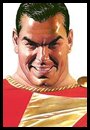 Level 1: No harm, no foul -- "Peachy keen"
There's an interesting resonance to placing a character like Captain Marvel at the top, just because Black Adam so clearly represents the other end of the scale.
This is the level representing heroes who exist on the greatest abstraction. For the most part they are entirely removed from the kinds of situations and scenarios that would bring them into moral conflicts, instead representing a wholesome simplicity. They fight monsters and aliens whose plans are reasonably transparent, and may even find themselves resolving battles with conversation. After school specials.
Level 2: Ideal Superhero -- "Best case scenario"
Writers have put Superman in positions that see him sliding up and down this scale, but on an idealistic level, he is closest to the child-friendly variety of vintage wholesome. What sets him apart is his connection to the human world, and specifically his inevitable confrontation and acknowledgment of elements much deeper on this list.
This is a hero who will do their best to resolve conflict through passive or defensive means, always reactionary, never pro-active. They are bound by a strict code of process, which sees a villain privvy to even the right to privacy.
He's the hero that exists in a world much more like the ideal compromise between freedom and injustice.
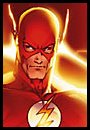 Level 3: Common superhero -- "Soft prevention"
Fairly typical of most superheroes, and maybe the defining quality of the Silver Age. These are heroes who will take preventitive measures wherever possible, but for the most part meet criminal activity with non-lethal force.
Much like a Superman, characters that fit into this category have probably seen darker times throughout their careers, but then, this isn't about defining a character like The Flash. This is about setting the paramaters by which characterization can be measured. This being around generic.
 Level 4: Law enforcement -- "Extenuating circumstances"
This is a character who most resembles real-world law enforcement agents, such as police officers. Force is used where necessary, prevention through intelligence is a valued, and when situations dictate, lethal force may be reluctantly introduced.
There are a lot of characters who will resemble this scenario, and Superman is certainly one that comes to mind, with cases like the time he was forced to regrettably condemn criminals to the Phantom Zone.
Ultimately I think it's important to stress that these characters are not quick to use violence, even though it is a part of their arsenal. Mr. Terrific, on the merits of his current associated with Checkmate, is a positive example of this.
 Level 5: Excessive force -- "On their terms"
This is the turning point, for me. Where the hero doesn't necessarily become more ambiguous, but his methods do. While his motivations may be pure, a Batman will meet characters with intimidation and force.
Batman makes a fantastic, vivid example because his code is very specifically against killing, even though he gladly endorses crippling force, broken bones, and severe psychological trauma.
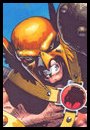 Level 6: Longterm prevention -- "An eye for an eye"
Like a level 5, this is a heroic character still unwilling to take a life, but unlike Batman, much more content with exerting higher degrees of force. It is a much more primal force for justice, quite likely to react to a crime and deliver a punishment accordingly.
We saw Hawkman deliver just such a punishment in a recent entry, where he severed the arm of the Matter Master, when he threatened a gala with his matter-altering wand [Hawkman #23]. Cause meets effect for this type of character, and the ends justify the means, but death is still a reluctant and unnecessary extension of this brutal force.
 Level 7: Longterm solution -- "A life for a life"
This is what we saw when Wonder Woman broke Maxwell Lord's neck and when the Justice League were attacked by Mongul [Infinite Crisis #1], and is where lethality is much more freely endorsed.
While all of the other levels would experience remorse or reluctance in taking a life, it's my opinion that this is the point in the justice scale where lethal force is a ready part of the arsenal the second this character opposes tyrrany. It does not necessarily entail wreckless behaviour, perhaps coming with good judgment, but is certainly a darker brand of good.
 Level 8: Blanket wrath -- "Punishment and suffering"
This is where it gets decidedly old testament.
This is the realm of characters like The Spectre, or Black Adam, who readily dish out the most brutal and deadly kind of punishment.
It is typically a hero of unwavering character, with the potential to become so incorruptable they are blind to the lines of what is necessary, and what is not. This is the extreme that Level 7 would live in threat of, and perhaps even be personally fearful of.
It brings us full circle, distanced from common reality by an impossible position of judgment that deals with humanity in the same way Level 1 does not. It represents the darkest end of the scale, just as Marvel does the lightest.
There may very well be flaws in the deeper logic of some of this, and certainly the specifics of the examples may lead to some confusion, but to place some kind of structure on the rules of our recent discussions, this totem will suffice.
It is important to remember that it is ultimately a totem of justice, and while a character like Black Adam fell into a depiction more explicitly evil, that is not the focus of this list.
The Fight: 4 The Issue: 5.5
[On the strength of her handling of Clayface, I'm going to give Powergirl a win stat here, even though her effect was minimal. Powergirl evaded me through my formative comic reading years, but through the efforts of creators like Geoff Johns, PG has not only earned a spot at the forefront of the DCU, but also the enjoyment of a reader who never paid much attention. And yes, I'm straight.]

 - The Green Lantern Corps is: John Stewart, Guy Gardner, Kilowog, Arisia, Breeon, Adam, Soranik Naru, Princess Iolande, Bzzd, Green Man, Torquemada, Voz, Apros, Brik, Tahr, Kraken, Chaselon, Sir Deeter, Leezle Pon, Lok Neboora, Raker Qarrigat, Salaak, Stel, Isamot Kol, Larvox, & Vath Sarn.
 From a distance the war is abstracted, appearing as a mass of wills colliding, but on the frontlines the personal struggles make-up the bigger picture. Among the heralds of the Anti-Monitor is Hank Henshaw, the Cyborg Superman that welcomes the lethal force initiated by the Guardians that oversee the Lantern Corps. He provokes their action, crushing the will of Lanterns beneath his cybernetic hand, while burning the wings of the courageous Hawkman.
 Meanwhile, heroes such as the Red Tornado, Starfire, Red Arrow, Black Lightning, and Firehawk do their bit to battle the swarming Sinestro Corps. They buzz and battle around the Anti-Monitor like insects, but each of their blows decides the fate of not only this Earth, but every parallel world that stems from it!


 Other Lanterns rush to aid their brothers, fending off the opposition of Sinestro's agents. With the Guardians doing their part to rupture the Anti-Monitor's armor, the Lanterns toss Warworld toward the New York City streets below, and prepare themselves for the mammoth task of containing the explosion.


 While the heroes of Earth fend off the advances of the Sinestro Corps; the City trembles as Warworld explodes, obliterating Hank Henshaw, and massive portions of New York, with it. The Anti-Monitor emerges, however, with his armor in tatters, but his resolve in tact. He lashes out at the unsuspecting Lanterns, but finally his undoing comes from an unlikely source, one of his allies, Superboy-Prime!


 Level 1: No harm, no foul -- "Peachy keen"
 Level 3: Common superhero -- "Soft prevention"
 Level 6: Longterm prevention -- "An eye for an eye"


