Thursday, October 11, 2007

SUB-ZERO versus SCORPION
(Malibu comics)
Where:
Mortal Kombat: Blood & Thunder #4 When: October 1994 Why: Charles Marshall How: Patrick Rolo

The story so far...
The sanctity of Mortal Kombat has ensured the safety of Earthrealm for thousands of years, giving humanity the platform to defend itself from the invasion of Outworld. The rules that guard the realms, however, are not without their points of exploitation.

Travelling through Outworld, protector god of Earth, Rayden, and the Lin Kuei warrior, Sub-Zero, each walk in the shadow of the conquering Emperor Shao Kahn, in an effort to defeat the evil machinations of the sorceror Shang Tsung.

Together they seek the mystic text of riddles dubbed the Tao Te Zhan; a pandora's box of power which, once solved, will unleash unfathomable energies upon both Earthrealm and Outworld. Some seek to try to control it, while warriors such as Liu Kang, Sonya Blade and Sub-Zero do their best to prevent the path to Armageddon...

Previous Form:
Scorpion (#295): Defeated by the thunder god, Rayden.
Raiden (#87): Holds a victory over Scorpion, surprisingly enough.
Sub-Zero: Noob Saibot is making his debut in the Infinite Wars.

Tale of the tape...
Strength: Rayden 3 (Athlete)
Intelligence: Rayden 4 (Tactician)
Speed: Rayden 3 (Athlete)
Stamina: Rayden 7 (Unstoppable)
Agility: Sub-Zero 3 (Acrobat)
Fighting Ability: Scorpion 6 (Warrior)
Energy Powers: Rayden 6 (Mass Destruction)


- Accompanying Sub-Zero in battle is thunder god and protector of the realm of Earth, Rayden. This feature also combines a precursor quick fix featuring a Lin Kuei warrior called Hydro.

- Sub-Zero is a cryomancer with the ability to create and manipulate ice to varying degrees. This allows him to not only freeze opponents, but also fashion weapons from ice.
Hydro, a member of the same clan, is only able to produce jets of water.

- This Sub-Zero is destined to die at the hands of his mortal nemesis, Scorpion, during the first Mortal Kombat tournament. It is this fate that sends him to the Netherealm, where the sorceror Quan Chi revamps him as the jet black wraith Noob Saibot, member of the Brotherhood of Shadow.

- Rayden is a god, and possesses powers according that include nigh invulnerability, control over lightning and electricity, flight, teleportation and otherworldy knowledge and association. Despite his impressive powers, Rayden is ultimately bound by the rules of the Elder Gods, and is typically forced to reduce himself to human-form when becoming active.

- Scorpion is Hanzo Hasashi; a Japanese Shirai-Ryu ninja who was murdered by his mortal enemy Sub-Zero, and tortured by the death of his family and clan. His soul tainted by sin, Scorpion proves powerful enough to thrive in the inferno of the Netherealm, and returns as a spectre, bound to unrest until the death of those responsible for the wrongs commited against him.

- The infernal strengths of a hellspawn spectre vary, but for Scorpion this typically includes a control over hellfire (including flame breath), teleportation, and increased strength and durability. When mortally wounded, Scorpion will return to the Netherealm, giving him the opportunity to once again escape.
Scorpion's assault arsenal also includes mastery over the kunai rope spear.

The Math: Draw The Pick: Scorpion

What went down...
Walking the wastelands of Outworld, Rayden and Sub-Zero discover tracks belonging to the younger Lin Kuei warrior called Hydro. Sub-Zero drops suddenly to the ground, his body shaken by the presence of the undead spectre, Scorpion!

Not far, Scorpion presses his advantage over the Lin Kuei warrior, evading his water blasts to attack with a variation on the spear attack. The spiked ball attached to his rope rips at Hydro's throat, signing his death warrant.

Revealing his true self; the flaming skull of the spectre; Scorpion lords over the wounded Lin Kuei, driving his fist in a spray of blood and gore to strike the killing blow. Celebrations are abruptly cut short as a bolt of lightning strikes Scorpion.

Looming over the rocky terrain of the wastelands is Rayden, with Sub-Zero entow, and unshaken before the hellspawn, as he had once been.

Unafraid of the undead manifestation of a man he once killed, Sub-Zero steps up to confront the Shirai-Ryu spectre to destroy him once again.

A spray of ice freezes the surprised Scorpion's body solid, leaving him unable to teleport away, or return the attack.

Sub-Zero leaps from his rocky vantage point to throw a mighty kick that shatters the frozen Scorpion. His body destroyed, the spirit of the spectre rises into the purple sky with the promise to return, despite Rayden's stern warnings.

The hammer...
Sub-Zero wins! Flawless victory! Fatality!
It shouldn't go unmentioned that Scorpion did pick up a victory/fatality of his own, defeating the infamous Hydro.

This gives us an opportunity to talk a little MK, but first I want to throw a shout-out to -Brad-. He took the ever pleasing initiative to take full advantage of the Infinite Wars as a resource, spreading the war cry by sharing the tape statistical analysis at the MKO message boards.

We already know from our extra-curricular weekend activities that I'm a big Street Fighter fan, and as polarizing as the two camps should be, I dilligently keep a foot firmly planted in both arenas. As the Infinite Wars attest, you should never limit yourself when it comes to good combat!

There are a whole range of motivations for running a site like this, but one of them is definitely to connect and provide an information/entertainment source for the online community. Taking full advantage of data collecting resources, I like to follow the interests that attract people to the Infinite Wars, and while SF no doubt attracts far more hits: Ask and ye shall receive!... Sometimes... Whenever possible...

One of SCORPION's lesser known trademark moves is the TELEPORT PUNCH.-Brad- raises some points concerning our tape analysis, which do well to cut to the core issues, asking why guys like Rayden and Scorpion are only rated a 3 for speed, when they can teleport instantly.

As you can see in this entry's new format tape, one of the explanations for scaling down Rayden's statistics are largely due to the nature of how he interacts. We have the difficult task of balancing the standard interpretation of a character in our statistics, which in the case of video game characters, tries to balance both in-game characteristics defined by gameplay, and also canonical traits typified in storyline and external sources.

Fortunately, Rayden's involvement is typically footnoted by a compromise to take human form. This far better reflects his in-game interactions with other characters, possessing much the same speed and strength as other playables.

There's also the matter of the nature of speed in context.
Dr. Strange can teleport anywhere in the world in a passing moment, but no one would regard Dr. Strange as a super-fast character. In the context of battle, speed pertains to the movement of the character in combat. Teleportation is a defensive abstraction of speed that slips under the radar of our tape analysis.

So, after that longwinded explanation, you'd think we'd take some easy sailing from here, but no, no. Not on the Secret Earth, friends. Our job isn't done if you aren't thinking about the material in question, which brings us back to some footnotes concerning the MK universe I am so fond of.

We mentioned earlier the "infamous" Hydro.
There's a general expectation of any adaptation, particularly relating to video games, that things aren't quite going to be as good as they might be. Often negatives specifically stem from major changes, or in a case like Hydro, additions made by the production licensing the franchise.

The MK fanbase, like any fanbase, has high walls designed to keep less invested fans out. An expected knowledge level leads to a competitive streak in fanbases, which invariably means one misinterpretation or lie can be permeated through uninformed word of mouth to become confused-fact.

Hydro was a Lin Kuei addition created by the good people at Malibu, presumably for disposable purposes as depicted in this particular issue. A Mortal Kombat comic without death, particularly in 1994 - two years after release - would seem almost unthinkable.

The irony of Mortal Kombat is, of course, that for all it's brutality and violence, very few characters actually ever die. Entirely understandable from a franchise perspective, but an awkward quality for the on-going story of a universe characterized by blood thirsty tyrants, and super-powered ninja.

Hydro somehow managed to filter through the MK fanbase, often mischaracterized as an undiscovered in-game secret character, or new addition to the series.

As far as original creations from external sources go, Hydro probably isn't too terrible, which is probably key to his permeatation. It isn't unreasonable to assume a clan that houses fighters who can create smoke and ice, might have intermediate counterparts capable only of producing watery spray.
And, as silly a name as Hydro is, it really isn't much worse than Sub-Zero.

Or Noob Saibot, which brings us to another convenient note to be made.
1993's Mortal Kombat II introduced through it's endings the shocking twist that the Sub-Zero featured was in fact the brother of the first game's.
The Sub-Zero of the previous game had been murdered by Scorpion during the first tournament, as per his revenge pact.

This ultimately raised more questions than it answered when Scorpion would continue to reappear in subsequent sequels.
Eventually the story would be solved in Mortal Kombat 4, where new character Quan Chi would be revealed as the unaccounted for in Scorpion's curse; responsible for the murder of his family and Shirai-Ryu clan.

It's also worth mentioning, before we wrap up, that despite his depiction in the Malibu series, the first Sub-Zero was far more corrupt than his successor. It was the second in-game Sub-Zero that would restore the name's pride, eventually battling and reinventing the Lin Kuei as a force for good. This would bring him into conflict with the resurrected original, as Noob Saibot.

That's probably more than enough MK for the regular readers.
If you're like -Brad- and you want to see more MK feature in the Infinite Wars, drop a comment and link your friends. I get Street Fighter hits from all around the world, and look what it got them! The sabbath!

Also a shout out to When Fangirls Attack, who are again carrying one of our articles, yesterday's Powergirl entry. I like to think our mindless antics bring a little spicey variety to the usual feminist batch, but as always, I express the fondest gratitude for their support.

The Fight: 3 The Issue: 3
[The Malibu MK comics really were quite atrocious, and one has to wonder if the penciller changes were at all because of that. I can't be as damning of this earlier issue, but it really does highlight the untapped possibility of the franchise. This certainly remains one of the licenses I'd most like to see at Nite Lite Theatre.]

Wednesday, October 10, 2007

THE SOCIETY versus POWERGIRL
The Survivors (DC comics)
Where:
Infinite Crisis #2 When: January 2006
Why: Geoff Johns How: Phil Jiminez

The story so far...
Long ago there was a crisis that threatened existence across dimensions. The champions of the multiple Earths opposed the existential threat, and through their triumph came a rebirth of reality, and a merged existence.

A select few survivors from worlds before the crisis were able to escape to a life exclusive to the redefined reality that was unfolding, some infiltrating the new central Earth with no memory of all that once was.

They were the likes of Powergirl and Psycho-Pirate, and they integrated into their new lives well, but such was not so for the refugees in non-space. Trapped in the crystaline universe they had made for themselves, they were forced to watch as life evolved in a very different, darker way, and their ideals were betrayed. Able to take it no more, these super forces take full advantage of unfolding instabilities, and reemerge to shape the worlds again...

Previous Form:
The Society [#20]: The Society represented an army of villains united, led by Lex Luthor, who used the fate of Dr. Light as a scaremongering motivator.
Powergirl: Making her overdue debut in the Infinite Wars.

Tale of the tape...
Yes. I am trying to provoke a response.Strength: Mr. Atom 6 (Invincible)
Intelligence: Giganta 5 (Professor)
Speed: Powergirl 5 (Super Speed)
Stamina: Powergirl 6 (Generator)
Agility: Clayface 7 (Infinite)
Fighting Ability: Powergirl 3 (Street Wise)
Energy Powers: Powergirl 5 (Lasers)


- This particular collective representing The Society includes; Psycho-Pirate in a leading role as a core member of the villainous cartel, with the muscle-bound team of Clayface, Giganta, Mister Atom and Girder assigned to capture Powergirl.

- While the majority of the team represent super strength, Psycho-Pirate is a much less offensive character. His powers revolve around the Medusa Mask, which can influence and amplify the emotional state of most targets.
Rare exceptions of exceptional will-power have been shown to resist the effects of the mask, such as Black Adam. [Infinite Crisis #6]

- Infinite Crisis served to clear away a garbled history, reinstating Powergirl's origins as a Kryptonian from the universe once identified by Earth-2. As such, Powergirl exibits powers closely resembling Superman, including; super strength, speed, invulnerability, heat-vision.

- A refugee from a world before the Crisis on Infinite Earths, Powergirl is apparently immune to the effects of Kryptonite from the contemporary DC Universe. In this respect, she is potentially more effective than her cousin.

The Math: Powergirl (Average) The Society (Total)
The Pick: The Society

What went down...
Somewhere in a city on Earth, a building shudders as Powergirl bursts through one of it's stone walls at the behest of a rampaging force of nature. Mud animate Clayface extends like a plank from the building, carrying Powergirl into a hard descent into the road below.

Psycho-Pirate emerges at street-level, reassuring Powergirl that she need not be worried, given that Luthor has expressed a requirement to have her alive.
It comes as little consolation as the Pirate's accompanying quartet of Society thugs loom over the street, Girder lamenting on the possibility of roughing her up.

Powergirl meets the challenge head-on, defiantly blasting her way through Clayface's swirling muddy mass with focused beams of heat-vision.

Mr. Atom, the robot that challenged Captain Marvel to his very limits, steps up to the plate, taking flight to knock the airborne Powergirl down with a super swing of his robotic fist. PG's descent brings her into the clutches of Giganta.

Just as Girder steps up to insinuate more harm for Powergirl, the storming clouds over Metropolis part, giving way to the bathing warm glow of Earth's yellow sun.

Something streaks by faster than a speeding bullet, clipping across Giganta's face to shake her grip, and free Powergirl from her enormous clutches.

More powerful than a locomotive, the same red and blue streak charges through the battlescene once more, achieving the impossible to rip through the super-durable frame of the robotic Mister Atom!

For Psycho-Pirate the writing is on the wall, but Powergirl can barely believe her eyes. There, hovering above the wrecked bodies of the Society's muscle, is someone familiar yet alien to Powergirl, soaking up the life-giving energy of the yellow sun that embues her.

With greying temples, there flies Superman.
"It's been a long time, cousin. Too long."

The hammer...
Coming in at the crucial moment to score a decisive win is Superman, from Earth-2, of course. Not that his Earth is Earth-2 now that we have fifty-two very specific Earths courtesy of Mr. Mind, and a megaverse revamp by Grant Morrison and the team.

Y'know, I very nearly defaulted to one of my pre-scanned stand-by issues of Wolverine, but I didn't want to let the Marvel/DC imbalance get away from me again, and despite Wolverine's relevance, the justice discussion has thus far hovered around the icons of the DC Universe, so we're following suit.

This was also a great opportunity to initiate Powergirl into the Infinite Wars, which is something I've wanted to do for quite some time, and this issue was on the hitlist, having been sitting on top of a pile for quite a while now.

What makes this issue such a great segue, apart from what's listed above, is that Powergirl was right at the centre of the Infinite Crisis mini-series as a crucial part of the underlying discussion of the nature of justice.
For the refugees of former Earths, their own desire for familiarity is largely defined by the methods of justice employed by heroes of their respective universes. We then, through the conclusion, see a divergence of justice, with characters like Superboy-prime and Alexander Luthor each following paths of what could be interpreted as villainy.

Typically I don't like to confuse an entry with images from unrelated sources, but I'm going to break format because, otherwise, we don't get to talk about this.
What I essentially want to do is try to add some depth to the theory of the totem of justice that has formed the spine of much of the discussion over the past month of Infinite Wars, and even abroad. [See; Infinite Crisis #1, Hawkman #23, JLA #118, Action Comics #824]

In trying to break down the degrees of force and intent in justice, I think I was able to break it down into eight levels, four representing the "light" and the "dark" of the matter. Obviously characters are known to fluctuate, and some of these examples build on my own personal inflections and ideas.

Level 1: No harm, no foul -- "Peachy keen"
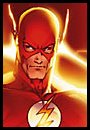
There's an interesting resonance to placing a character like Captain Marvel at the top, just because Black Adam so clearly represents the other end of the scale.

This is the level representing heroes who exist on the greatest abstraction. For the most part they are entirely removed from the kinds of situations and scenarios that would bring them into moral conflicts, instead representing a wholesome simplicity. They fight monsters and aliens whose plans are reasonably transparent, and may even find themselves resolving battles with conversation. After school specials.

Level 2: Ideal Superhero -- "Best case scenario"
Writers have put Superman in positions that see him sliding up and down this scale, but on an idealistic level, he is closest to the child-friendly variety of vintage wholesome. What sets him apart is his connection to the human world, and specifically his inevitable confrontation and acknowledgment of elements much deeper on this list.

This is a hero who will do their best to resolve conflict through passive or defensive means, always reactionary, never pro-active. They are bound by a strict code of process, which sees a villain privvy to even the right to privacy.
He's the hero that exists in a world much more like the ideal compromise between freedom and injustice.

Level 3: Common superhero -- "Soft prevention"
Fairly typical of most superheroes, and maybe the defining quality of the Silver Age. These are heroes who will take preventitive measures wherever possible, but for the most part meet criminal activity with non-lethal force.

Much like a Superman, characters that fit into this category have probably seen darker times throughout their careers, but then, this isn't about defining a character like The Flash. This is about setting the paramaters by which characterization can be measured. This being around generic.

Level 4: Law enforcement -- "Extenuating circumstances"
This is a character who most resembles real-world law enforcement agents, such as police officers. Force is used where necessary, prevention through intelligence is a valued, and when situations dictate, lethal force may be reluctantly introduced.

There are a lot of characters who will resemble this scenario, and Superman is certainly one that comes to mind, with cases like the time he was forced to regrettably condemn criminals to the Phantom Zone.
Ultimately I think it's important to stress that these characters are not quick to use violence, even though it is a part of their arsenal. Mr. Terrific, on the merits of his current associated with Checkmate, is a positive example of this.

Level 5: Excessive force -- "On their terms"
This is the turning point, for me. Where the hero doesn't necessarily become more ambiguous, but his methods do. While his motivations may be pure, a Batman will meet characters with intimidation and force.

Batman makes a fantastic, vivid example because his code is very specifically against killing, even though he gladly endorses crippling force, broken bones, and severe psychological trauma.

Level 6: Longterm prevention -- "An eye for an eye"
Like a level 5, this is a heroic character still unwilling to take a life, but unlike Batman, much more content with exerting higher degrees of force. It is a much more primal force for justice, quite likely to react to a crime and deliver a punishment accordingly.

We saw Hawkman deliver just such a punishment in a recent entry, where he severed the arm of the Matter Master, when he threatened a gala with his matter-altering wand [Hawkman #23]. Cause meets effect for this type of character, and the ends justify the means, but death is still a reluctant and unnecessary extension of this brutal force.

Level 7: Longterm solution -- "A life for a life"
This is what we saw when Wonder Woman broke Maxwell Lord's neck and when the Justice League were attacked by Mongul [Infinite Crisis #1], and is where lethality is much more freely endorsed.

While all of the other levels would experience remorse or reluctance in taking a life, it's my opinion that this is the point in the justice scale where lethal force is a ready part of the arsenal the second this character opposes tyrrany. It does not necessarily entail wreckless behaviour, perhaps coming with good judgment, but is certainly a darker brand of good.

Level 8: Blanket wrath -- "Punishment and suffering"
This is where it gets decidedly old testament.
This is the realm of characters like The Spectre, or Black Adam, who readily dish out the most brutal and deadly kind of punishment.

It is typically a hero of unwavering character, with the potential to become so incorruptable they are blind to the lines of what is necessary, and what is not. This is the extreme that Level 7 would live in threat of, and perhaps even be personally fearful of.

It brings us full circle, distanced from common reality by an impossible position of judgment that deals with humanity in the same way Level 1 does not. It represents the darkest end of the scale, just as Marvel does the lightest.

There may very well be flaws in the deeper logic of some of this, and certainly the specifics of the examples may lead to some confusion, but to place some kind of structure on the rules of our recent discussions, this totem will suffice.

It is important to remember that it is ultimately a totem of justice, and while a character like Black Adam fell into a depiction more explicitly evil, that is not the focus of this list.

The Fight: 4 The Issue: 5.5
[On the strength of her handling of Clayface, I'm going to give Powergirl a win stat here, even though her effect was minimal. Powergirl evaded me through my formative comic reading years, but through the efforts of creators like Geoff Johns, PG has not only earned a spot at the forefront of the DCU, but also the enjoyment of a reader who never paid much attention. And yes, I'm straight.]

Monday, October 08, 2007

FANTASTIC FOUR versus DR. DOOM
Doom: Part 6 (Marvel comics)
Where: Ultimate Fantastic Four #12 When: December 2004 Why: Warren Ellis How: Stuart Immonen

The story so far...
Selected for a government funded think-tank, child prodigy Reed Richards is united with some of the most brilliant young minds in the United States. Forming a friendship with project director Storm's children, Susan and Johnny, the underpinnings of the Fantastic Four are born.

Experimenting with his theories of teleportation, the young Reed Richards prepares an attempt to teleport an apple, not knowing of the unsolicited intervention of his stubborn Latverian rival, Victor Van Damme, who is under the belief Richards' calculations require slight correction.

 The change results in an unexpected trip through the mysterious sub-dimension of the N-Zone, which leaves the quintet, including Richards' high-school buddy Ben Grimm, mutated in five individual ways. Spiteful, Van Damme uses his new found powers to pursue a hidden agenda of world domination, purveyed by a secret European organization, and begins by leading his tiny home nation to prosperity as the villainous Dr. Doom.

Previous Form:
Fantastic Four [#2]: Nearly unbeatable as a team, their only recorded loss coming from a future without Mr. Fantastic, against a transformed Death's Head II.
Dr. Doom (#118): The subject of Mondays in October, he suffered a quick fix defeat in the Monthly Punch-Up, facing up against Thor, norse god of thunder.

Tale of the tape...
Strength: Thing 6 (Invincible)
Intelligence: Mr. Fantastic 6 (Genius)
Speed: Human Torch 3 (Athlete)
Stamina: Dr. Doom 6 (Generator)
Agility: Mr. Fantastic 6 (Rubber)
Fighting Ability: Invisible Woman 4 (Trained Fighter)
Energy Powers: Human Torch 7 (Solar Power)

- The Fantastic Four possess much the same abilities in the Ultimate series as their standardized predecessors. Mr. Fantastic becomes an elasticated super-morph; Susan Storm gains the ability of pseudo-kinesis and invisibility; Johnny Storm becomes a man on fire as the Human Torch; and Ben Grimm's bulk is turned to stone, making him the man-mountain called the Thing.

- Their think-tank origins redefine the members of the Fantastic Four as all having particularly keen intellects, with the exception of Ben Grimm, who loses his career as a test pilot and completed college education.

- Dr. Doom undergoes the most dramatic transformation, his armored visage now organic in nature, and part of his body. Likewise, his physiology is initially altered to give him hooves instead of feet, spiney projectiles at his fists, and toxic organs, giving him the ability to breath noxious gas.

- As with the traditional Doom, Victor Van Damme eventually comes into possession of various magics through exploration into Atlantis, and also plunders advanced technologies, adding to his own considerable arsenal of invention.

The Math: Dr. Doom (Average) Fantastic Four (Total) The Pick: Fantastic Four

What went down...
Having crash landed in Latveria and already faced Van Damme's wrath, Reed Richards stands alone amidst the rubble of Latverian squabble.

Doom, arrogantly assuming Richards to be powerless, lordes his mutation as a gift from the cosmos that recognised his destiny for greatness. Richards heckles Van Damme's notions of a warrior's upbringing, referring to his monarch father's disdain. The quip finds a soft spot on the armored Doom, who charges at the young Richards with a berzerker snarl.

Mr. Fantastic reveals himself to his deranged rival, entangling him in the elasticated contortion of his rubber body.

Wrapped around Doom like a viper, Richards snags one of his goat-like legs and hurls him across the battlefield.

Doom screeches to a halt as his metallic body leaves a path of sparks along the stone of the Latverian cobble street. He lets loose a familiar growl of his rival's surname, bitterly denying demands for the faulty input that changed them each.

Continuing to flaunt his inflated ego, Doom verbally spits in Mr. Fantastic's face, declaring himself something magnificent, while Richards is but a rubber-bodied freak.

A focused burst of flame rains down upon the defiant Doom, heading his metallic body to smouldering. Richards orders his fellow, the Human Torch, to keep his super-heated assault to a minimum.

The Invisible Woman looks to get a little bit for herself aswell, encasing Doom's head in an invisible force field as reprieve for his previous death-breath indescretions.

Doom brings his taloned fingers to the field, clawing desperately enough to send a reverberation back to Invisible Woman herself. Struggling under the strain, she calls upon the aid of the strongman of the Fantastic Four -- the Thing!

A hapless victim in the transformation process, it is Thing who perhaps has the most malice to bare against Doom, trapped in an unfeeling body of stone and rock.

Coming to Susan's aid, Thing snatches Doom in the palm of his giant rocky hand, and brings him crashing down with force, smooshed into the ground.

"I only met you like twice. And I hate you already."

Just then an alarm triggered by electromagnetic activity sounds on Mr. Fantastic's wrist gauntlet.

Set-up to detect wireless control of robots, Richards quickly realises the threat is much less disposable.

Rising from his crater in the street, Doom again professes his power as a king, revealing his 'loyal' subjects, each equipped with a nano-tech tattoo of a dragon on their necks, that bites deep to take control of them.

Doom rises to an endless echo of approval. Like a herd of zombies, the Latverian people all gladly pledge their love for Victor Van Damme, willing to kill the Fantastic Four for defying him.

Surrounded by innocent pawns in Doom's game, the Fantastic Four struggle to combat the rampaging hordes without causing them harm. Richards, knowledgable in Van Damme's techniques, asks his team to buy time to negate the mind-controlling influences of Doctor Doom's technology.

The Thing barrels his way through the crowd, while Human Torch offers threats of flame. New to his powers, and perhaps underestimating of the crowd's mindless bloodlust, the Torch ignites some of the citizens by accident.

The Invisible Woman throws up a forcefield to protect the beseiged team, while Richards works on a solution to the problem. The strain eventually proves too great for the youngster and her new powers, the attacking mob pushing her to unconsciousness.

With Dr. Doom violently reciting the chain of Latverian royalty, the Fantastic Four find themselves overcome by the controlled mobs until -- shots fire from the sky and the sound of choppers washes over the small Latverian square.

The US military fires without the concern of the heroic FF, killing the controlled, much to Doom's distain. Troops emerge from the copters revealing orders to bring Van Damme into custody, but before the situation can escalate, Danish tanks roll into the square, ordering the US to pull out of their witch hunt.

Believing he has had the last laugh, Doom is shocked when he belt explodes, signifying the success of Richards' intentions to end his radio control over the human shield of Latverian peasants. Finding solace in the control of the data that could reverse the FF's mutations, Doom provokes a final assault.

Spotting one of Doom's own spikey projectiles in the sand, Richards snatches it up and whips his elastic arm to Doom. The metal of Doom's own make-up proves capable of slicing his face in a way that prevents it immediately healing.

Doom is left alone with his curse, defeated but free to fight another day.

The hammer... With a little help from the murderous US military, the Fantastic Four walk away with the win on points, if not decisive result!

As with any capialist business venture, you're always going to have much better odds of introducing new elements of change to a system if you've got some previous success. The contemporary comics industry couldn't be truer, with submissions at the major two comics companies all but shut off. In that respect, the Image concept closed one door while opening another.

Those not familiar with the second Ultimate Fantastic Four storyarc might recognise the team of Warren Ellis and Stuart Immonen from their geek-chic revamp maxi-series that followed; Nextwave: Agents of HATE.

Even big name writers and artists have roadblocks like editorial and marketing to contend with, and given the departure of Nextwave, I'd like to hazard a guess that UFF comes out of Ellis and Immonen earning a little bit of credibility (and cash) at Marvel Comics, because it certainly reads like that.

When you talk about the contemporary sci-fi setting of UFF and put Warren Ellis' name next to it, the imagination can go wild. One starts to imagine all manner of tech-savvy science fiction, and far-out distortions of what's become expected in a Fantastic Four comic. Alas; this portion of Ellis' Ultimate work tends to read much more like a mean-spirited Adventures title, putting very little into the single issue in favour of a very light superhero read. Immonen's pencils, fantastic as they are, add to this quality that far better serves a stylistic, tongue-in-cheek superhero romp like Nextwave, than what you'd expect from FF.

Not that Ellis and Immonen didn't have some obstacles working against them.

The Ultimate revamp saw to distance itself admirably from the original Four, but at the cost of many of the things considered great about the Fantastic Four.

Included in the origin to the point of being responsible for their creation, the goat-legged transformed Dr. Doom bares only superficial resemblance to what many regard as the greatest villain in comics history. His visage aside, this Doom possesses much less of the redeeming qualities of the familiar character, making him a much simpler, overtly evil opponent.

Likewise, as Dr. Doom loses a degree of pathos, so too do the Fantastic Four.

Doom's intervention in the experiment that resulted in their creation strips Reed Richards of the responsibility that made him the target of Ben Grimm's aggressions many times through history. Depression over his condition remains in the Grimm character, but without the justified internal conflict of both he, and his dear friend Richards, who constantly fails to turn his super science to reversing the effects of the cosmic radiation.

Likely due to the chagrin of many fans, Doom has since taken on a much more familiar appearance, and Mark Millar's return to the title included a story dedicated to preventing the accident to save Ben Grimm mental anguish, delivered without concern for the stripped weight of the story's drama in this world.

Which brings us to a much needed positive. It certainly isn't all bad!

Though not quite as mature and considered as Ultimate X-Men and The Ultimates, UFF found a solid run with Millar's solo return. A steady contrast to his creating collaboration with Brian "Convert for the gags*" Bendis, who wrote trademark meandering scripts based on Millar's conceptuals.

Millar not only redefined the UFF on terms more familiar to what made the original so legendary, but he also managed to expand on the mythos of the Ultimate Skrulls, and left an undying legacy of the Marvel Zombies. Granted, that last part might actually be a negative, given the nauseating over exposure of the Marvel Zombies brand since expanding out of the UFF storyarc. Look for a slew of irrelevant zombie variant covers on major Marvel titles through October. Oh, to turn against hallowe'en.

That's probably all the hating we have time for today, but join us next week as we continue a full month of DOOM in the name of the Marvel Ultimate Alliance Mondays initiative. We promise not to excede the agreed designation of this theme, which will last only for the duration of October.

The Fight: 5 The Issue: 4.5

[Adding to the absurdly named Victor Van Damme's backstory, Ellis includes direct lineage from Vlad Tepes, the Wallachian king known for his love of impaling. Tepes is widely regarded as the inspiration for Bram Stoker's famous literary account of the vampire, Count Dracula.]

Sunday, October 07, 2007

GUILE versus RYU
The King of the Air Force: An Explosion of Menacing Military Combat (Group TAC/Capcom/Manga)
Where:
Street Fighter II V Ep. 2 When: April 1995
Why: Gisaburō Sugii How: Kōji Tsujitani/Skip Stellrecht & Tesshō Genda/Kirk Thornton

The story so far...
When billionaire heir Ken Masters contacts his martial arts training partner, Ryu, by letter, Ryu makes the long trek from Japan to San Francisco to reunite with his friend.

Brought together again, the two are impressed with the development of their martial arts skills, and challenge each other as they propel themselves into mischief with the help of their tour guide, Chun-Li.

To spark their quest to develop their martial arts, an encounter with US Air Force thugs in a bar called Mt. Fuji. Though the skillful Ken and Ryu are able to defeat the thugs with ease, their commanding officer Guile may prove more sport.

Previous Form:
Guile (#107): Defeated Shadaloo thug, Birdie, in an issue of the UDON comic.
Ryu (#118): Victory over Balrog, with ties with Ken Masters, and a loss to Sagat.

Tale of the tape...
Strength: Guile 3 (Athlete)
Intelligence: Guile 4 (Tactician)
Speed: Ryu 3 (Athlete)
Stamina: Guile 5 (Marathon Man)
Agility: Draw 3 (Acrobat)
Fighting Ability: Ryu 5 (Martial Artist)
Energy Powers: Draw 3 (Explosives)


- Guile is a US Air Force Major versed in various hand-to-hand combat skills not typically associated with any traditional martial arts. His skills and determination as a special forces trainer have earned him the attentions of Interpol.

- Along with his impressive special forces fighting techniques, Guile is also able to harness his ki for trademark energy attacks including the sonic boom, and the flash somersault kick. These give him an impressive scope which compliments his strong grappling/striking technique.

- The Japanese nomadic martial artist Ryu is on the path to mastering a dangerous and nameless ansatsuken karate style of fighting, previously mastered by the brothers Akuma, and Gouken. It has been erroneously identified as a shotokan karate style.

- Ryu's style promotes mastery over one's ki, focused in the form of his powerful hadou ken ki blast, and sho-ryu ken uppercut. When the killing techniques of this unnamed style are mastered, a fighter's hadou ki can become corrupted by an immensly powerful dark version of the hadou.

- Ryu's style incorporates many basic striking punches and kicks, all of which make him a well rounded conventional martial artist.

The Math: Guile The Pick: Ryu

What went down...
Having disposed of the military thugs that menaced them, Ryu and Ken find themselves face to face with their Sergeant - the brush-haired, Guile!

Guile taunts the much younger Ryu with talk of study, prompting Ryu to continue the assault against the senior soldier with a grab of his jacket. Ryu swings through, finding Guile has nimbly slipt out of his coat, leaving Ryu holding it.

Guile takes a ready stance, and provokes Ryu into an all-out attack.
Showing considerable speed for his frame, Guile ducks and weaves around a barrage of punches and kicks, leaving Ryu nothing but air and drywall.

Ryu looks for a flying kick, but again Guile proves too quick, slipping sideways to put a table of drinks in the young Japanese fighter's path.

As Ken, the bartender and the other Air Force punks watch-on, Ryu finds himself tiring after both the fight with Guile's fellow soldiers, and his recent attacks.
Guile taunts Ryu, prompting another wreckless charge that gives Guile the momentum to swiftly bury his fist into Ryu's stomach.

Time freezes at the moment of impact as the wind is sucked from Ryu's gut.
The Sergeant orders Ryu to leave the bar and never return, sending him flying through the air with a devestating backhanded fist.

Ryu comes to a crash landing on another drinks table, sending some female on-lookers fleeing. Guile, assuming the battle is won, attends to his beaten buddies, only to find Ryu again taking a ready stance in the middle of the bar.

Ryu, sweating and beaten, defiantly refuses to concede defeat.
The two fighters charge at each other, Guile proving to be the fresher of the two as he punches Ryu's fist aside, ducks a kick, and follows with a barrage of unforgiving military trained fists.

Taking decisive control of the fight over his tiring opponent, Guile grabs Ryu by the shirt and tosses him over the bar into the shelves of drinks.

The move does surprisingly little, with Ryu reemerging almost instantly from behind the bar to make use of the opened space. He leaps out, flying at Guile with another airborne kick.

Guile manages to block the impressive move, using Ryu's follow-up kick to take the battle close quarters with a grapple that turns Ryu onto his stomach. Maintaining control of the youngster's leg, he tosses him at the wall, but Ryu shows tremendous control, turning his fall into a rolling offensive.

Ryu again springs from the roll, launching once more into a wave of kicks that are blocked by the bulky American. Guile again calls upon his grappling skills, snatching a punch to wrap the arm behind Ryu's back.

With his grip tightening Guile warns Ryu to cease his attack, or he'll be forced to crush his shoulder. Ryu throws his feet up, pushing off the bar to defiantly throw himself backwards, putting Guile between his fall and the hard floor.

Ryu, bleeding from the head and mouth, is reduced to a charging tackle that pushes Guile's spine into the edge of the bar. Enraged enough not to remain shaken, the Sergeant unleashes his full fury with a throng of rips that hit hard at Ryu's already punished mid-section.

Guile beats at Ryu's face relentlessly, putting the exclamation point on the battle with a trademarked somersault kick that sends Ryu high into the air for a harsh descent.

With Ryu down for the count, Guile challenges Ken, who has remained at the bar throughout the fight. Ryu's American buddy fires his own moral code at Guile, who was not present to see his fellow Air Force buddies attempt to gang-fight the two younger tourists.

To the shock of all present, a swollen and bloodied Ryu again staggers to his feet, once again taking a ready stance. Guile acknowledges his determination, walking past the clearly beaten fighter, leading his men out of the Mt. Fuji bar.
The Japanese fighter collapses the moment they leave.

The hammer...
After a hard-fought and brutal bar room brawl, our winner and still undefeat street fighter: Guile!

Much like elements Masaomi Kanzaki's work [ie; Street Fighter II #1], SFIIV takes the familiar characters and motiffs, and recasts them in a different light. This series presents our shoto protagonists as righteous martial artists coming into their twenties, freely characterizing them as brash and occasionally even hot-headed, as is perhaps the case with the battle against Guile here.

On the basis of the first episode, Ken and Ryu were probably within their right, but even acting on the assumption that Guile would join his packrat buddies, they were given ample opportunities to reassess the situation through the fight.
Guile proves to be a harsh but fair taskmaster, challenging the fighters in a way that will continue to be referenced throughout the series, and in many ways is the crucial catalyst for their adventures across the globe.

The uninitiated would come into this episode assuming the brash attitudes of Ryu and Ken, that ultimately repositions them as the antagonists in their fight with Guile, probably assuming that this is just down to a choice in characterization. What's interesting to note, as the series progresses, is that this very fierce, and unruly nature for fighters, is ultimately brought into question by the yoga-master Dhalsim. They are forced to reflect on events just like this one, and reevaluate their methods, in ways that allude to the dangers of the dark hadou, without ever approaching that thematic material.

Street Fighter II V is one of those series regarded by many with some reservation, but for me it probably hit at the perfect time. Through the mid-to-late nineties I made a conceited acquaintance with the vaguely familiar realm of animé, and as a life-long Street Fighter fan, found a great accompaniment to other series that would foster that interest.

SFIIV deviates from the source material in a lot of interesting ways, which make such discrepencies quite forgivable. The violence takes on a new tone as the characters are thrust into a fictional world of organized crime that permeates beyond the cartoon villainy of Bison's Shadaloo, and branches into the corruption of modern society.

Ryu and Ken are forced to contend with knife-wielding gangsters, murderous underground fight clubbers, drug planting frame-ups, prison life, and organized corruption in sport and cinema. All things that build on the existing themes of the military and law enforcement from the games, with characters like Guile (US Air Force) and Chun-Li (Interpol), and the espionage and world crime of Shadaloo's agents.

As we continue our look at Street Fighter, this series will inevitably become a stalwart of the weekends, with many more feature characters still to come.

I had a bizarre online confrontation with a testy, over sensitive, would-be reviewer recently; so more than ever I just want to wrap-up with some of the positives of the comics industry, which can sometimes be overshadowed.
Lord knows, like German tourism, the confused and maladjusted are everywhere!

- Pedro Cruz has begun a new on-going web strip called Cosmopolis that will unfold on a regular basis. Pedro provided pencils, inks and letters for the first issue of The Kirby Martin Inquest, which is on sale online right now!

- A few days ago KJ shared her adventures through Wonder Woman land, and if you've been reading the on-going discussion of the justice scale on the Infinite Wars, you might even like to check out the comments where she's been engaging me in some lively discussion. Very interesting stuff!

- It happened last week when Bully stepped up to the Bahlactus FNF, and lord knows it happened again. In a post truly worthy of the Infinite Wars, see the Invisible Woman take on Crystal! If he keeps that up, I might have to send my chronies around to beat stuffing outta him fer showin' me up!

A couple of overdue thanks too to some of the bloggers out there who are helping spread warbonds for the Secret Earth. Big shout out to Comics Make No Sense, The Sock Drawer, and all the people showing up in the menu.

The Fight: 6 The Episode: 6

[Street Fighter II V is a series that I'm often told went under people's radar, and from what I've heard, it's now being re-run on the Sci-Fi channel for any Americans out there. It's also available on DVD in a twenty-nine episode set, that I am more than pleased to finally own, having never bought the VHS...]

Friday, October 05, 2007

HULK versus SPIDER-MAN
Spider-man vs Hulk at the Winter Olympics - Chapter Four: The Contest of Champions
(Marvel comics)
Where:
Marvel Treasury Edition #25 When: 1980
Why: Bill Mantlo, Mark Gruenwald & Steven Grant How: Herb Trimpe

The story so far...
The Thirteenth Winter Olympics have come to Lake Placid, New York, and it's not just the Russians who will antagonise the American hopefuls of ice hockey, figure skating, and bobsleigh. Lurking underground are the competitive aspirations of rival subterranean rulers -- the Moleman and Queen Kala!

In an effort to expand their underworld armies, Moleman and Kala each recruit champions from the surface world, both Olympian and superhero, against their will. It's at this time that Peter Parker, covering events for the Daily Bugle, is forced to spring into action as his alter-ego, the spectacular Spider-man!

As armies of Lavamen and Moloids clash underground; the Outcasts, kidnapped Olympians, Spider-man, and Hulk, are pitted against each other in a contest of champions. The stakes are high, as the battle for the underground threatens to destroy the surface as the battle erupts to rise Lake Placid into the air!

Previous Form:
Hulk (#7): Major victories over Thor, the Avengers & Daredevil.
Spider-man (#1): Victories over powerhouses like; Lizard, Rhino, Grey Gargoyle, Sandman & Scorpion.

Tale of the tape...
Strength: Hulk 6 (Invincible)
Intelligence: Spider-man 5 (Professor)
Speed: Spider-man 4 (Olympian)
Stamina: Hulk 6 (Generator)
Agility: Spider-man 5 (Cat-like)
Fighting Ability: Hulk 6 (Warrior)
Energy Powers: Spider-man 2 (Projectiles)


WHY HULK OUGHTTA!!!- Exposure to heavy doses of gamma radiation embued Bruce Banner with hidden wells of super human strength which, when enraged, boil forth to give way to the incredible Hulk.

- Hulk's strength is often seen to fluctuate in correlation with his anger and stress levels. This has served to make him one of the most powerful physical fighters in the Marvel universe.

- Spider-man possesses the enhanced strength, speed, and agility of a spider. Adding to his arsenal, a precognitive spider-sense that warns him of pending danger, and self-made webshooters, which have since been replaced by a mutation reminiscent of scenes from the Spider-man feature films.

What went down...
Having agreed to represent Moleman in his battle against Kala's forces, Spidey steps up to the armored visage of a gladiatoral Hulk, while the Outcasts square up against the forces of the kidnapped Olympic athletes.

Hulk, suffering the effects of being drugged by Kala, lumbers quickly into battle with wild punches. Spidey's agility gives him the edge to stay out of reach, while he playfully mocks Hulk's choice in wardrobe.

In a show of strength Hulk flexes his muscles, bursting out of the "stupid" armor fashioned for him by Queen Kala. The decision frees his movement, allowing the Hulk to better match the speeds of his opponent. He charges Spidey, snatching him off the ground before he can leap away.

Through the fog of the drugs fed to him, Hulk opts for death by throwing, hoping to toss Spidey to his demise. Instead, Spider-man is able to use his web-shooters to snag a line on a nearby ski-lift track, swinging around the surrounding carnage to come back to Hulk.

Hoping to use the momentum of his swing, Spidey lands on the ice, careening directly toward the waiting jade giant. His decision becomes less confident as he closes the gap, and while he cannot stop on the ice, Hulk grows tired of his slowed speed and shatters the frozen lake with a quake making punch.

Spidey momentarily leaps clear of the focused rift as it tears through the action of the surrounding skirmishes. The aftershock tosses Spider-man into the air anyway, flipping away from the Hulk's path of destruction, for the moment.

Spider-man again seeks the aid of the chair lift, using it to navigate a speedy path up the mountain, which catches the attention of the Hulk. Spidey remains ahead as the Hulk leaps his way up, falling into Spider-man's trap.

Using his patent-pending web-fluid to fashion a pair of snow skis, Spider-man again seeks the aid of momentum in toppling the incredible Hulk. He charges down the mountain directly for his drug-addled foe, hoping the velocity will give his spider-enhanced strength the edge it needs.

Hulk boastfully stands his ground, awaiting the Spider-man's collision with his massive green frame.

Spider-man leans forward for a final boost of speed, only to plow directly into the immovable Hulk, much as the verbally challenged monster had expected. Spidey once more finds himself in the vice-like grip of the Hulk.

In a twist, Hulk expresses remorse, explaining Queen Kala's order to kill Spider-man as a plan not his own.
Despite his regret, the Hulk holds Spider-man in the air, pressing down on his chest with a mighty grip.

Spider-man manages to use the situation to position his legs between he and the bulky chest of the gamma irradiated Hulk. Resisting the crushing strength of the green goliath, Spider-man manages to spring himself free, pushing off.

Spidey's efforts not only free him from the deadly grip of the Hulk, but also put the jade giant off-balance at the edge of a snow covered mountain. Perhaps influenced by the effects of Kala's drugs, the dim-witted Hulk realises his predicament too late, tumbling backward over the mountain.

His descent gathers more snow, resulting in the formation of a crunchy-centered Hulk snowball. With the New York crowd watching on, the Hulk tumbles down to collide with the audience box in which Kala and the Mole man are seated.

The move shatters the glass dome that protects Kala from the aging effects of the surface atmosphere. Her youth a fading memory, Kala finds herself at the mercy of Mole man, with her own lava men recoiling at her sight. As her powers begin to fade, so too do the controlling effects that held the Hulk in her service.

Freed, the Hulk finds himself confused about his predicament.

Spider-man notes the pedastal constructs used by Mole man to seperate Lake Placid from the rest of the Earth. Hulk, wanting but to be left alone, is content to rise to the occasion. He pounds the ground with unbridled rage, expressing distain for the chatter of the red and blue Spider-man.

Hulk's mighty strength proves enough to shake the techno-constructs that lifted the Olympic grounds.

With the ground restored to a level state, and the threat of the warring subterranean monarchs subsided, Hulk opts to leave the Olympians and Spider-man to their own devices. Content in the fact that he has once again proven himself the strongest one there is.

The hammer...
As much as Spidey managed to get Hulk on the back foot, I think in terms of their one-on-one battle, we've got to call this one a draw!

If you're reading this particular entry it may be courtesy of the links provided by Bahlactus, as part of the Friday Night Fights initiative. FNFs is bringing the blogosphere together with fight styled antics and re-lettered panels with droll phrasings. If it helps you, feel free to imagine any of the above Hulk panels with Electric Six lyrics replacing the dialogue. Don't you want to know how we keep starting fires?

If the topical atmosphere of the 1980 Winter Olympics somehow escaped you, you may need to be told that this is, of course, a special back issue review from the vault, highlighting one of Marvel's long-running Treasury Editions.

I'm reminded new readers [like Jade] might not have the benefit of knowing that Treasury Editions were over-sized annuals published through the seventies into the early eighties. Our standard cover image has been resized, deceiving you to the actual proportions, which are much squarer, along the lines of a newspaper.
They often featured reprinted material, which maybe makes this one slightly unique for being an original story. It preceded the infamous 1981 Edition, which featured a Superman/Spider-man crossover. Alas, I do not own that.

This comic by it's very nature is a little bit silly. It takes the tried-and-true KLF method of making a pop record, latching on to something as dating as the Winter Olympics of the year. With a twist of Superpro, the Olympians featured in the story get a healthy injection of super into the skills represented by their respective sports, allowing them to do combat with disfigured foes like the Outcasts.

For me, while this isn't a particularly intelligent comic, it holds many fond memories. I had to borrow my cover scan from a google image search, because my version wears the battle scars of twenty-seven years of love. If I recall correctly, this was a bargain bin Christmas gift from a comic store I did not frequent as a child. It was one of those hole-in-the-wall stores around one of the less desirable parts of town, stumbled upon one day inadvertently.

Like last feature's Deadpool/Taskmaster romp, this is just a fantastic example of superhero comics as cause and effect. It's sixty-four pages of contrived action, pitting two of the Marvel media giants of the decade against each other, with the thinnest plot available. One that even manages to stumble over itself as moments transition over each other, and Spidey manages to slide ten metres on ice, over the course of five pages.

I couldn't in good conscience pick this up today and give it a good review. It just isn't how contemporary comics should be delivered, but that basis is built purely on the context of the times. This comic book, for me, represents history.
It represents what events from the early 1900's equal to our contemporary society. Let the record show that once upon a time in history, Mole Man and Kala duked it out for supremacy over the underground, as they had before. Let it be considered that this defeat was but a contributing factor to Kala's appearance irrelevance in today's comics, and let it be assumed she is out there somewhere, or has suffered a fate befitting of a character who cheated old age so often.

I have a special affection for these characters. A decade later they [the Outcasts, Queen Kala] would appear in an Iron Man annual that would again inspire the awe of superhero comics, and dredge up those fond memories of lifting the giant-sized pages of this very Treasury Edition.

Alan Moore speaks of Watchmen as a project that was dedicated to doing things traditional literature and film couldn't typically produce. If there's something I inflect on that quote, it's the time and effort dedicated to conjuring emotional response from these characters. The in-built history and association we are able to form by their regular publication, and which colours the Watchmen due to their derivative inspiration as analogies for famous Charlton characters adopted by DC.
This isn't a great comic to be preserved for the ages.
This is a piece of the evolving history that may not mean much to Hulk or Spider-man fans, but finds it's significance in the evolution of the subterranea, and the life and times of the Mole Man. A moment a secondary villain character would very rarely benefit from in any other medium.

I've struggled a little over the past week or so to come to the Infinite Wars with an agenda, or a motivated discussion. Without the fuel of weekly comics to spark my interests, that might not change, but at the very least I can express today a sense of joy for what comics have meant to a literary movement. As the medium permeates through the existence of shows like Heroes and Lost, and the multitude of blockbuster movies coming out, I can see all that Marvel Treasury Edition #25 can mean. This is comics!

And hey, if you'd like to help inspire me, why not jump on board as a sponsor?
Yes sir, that's an empassioned segue! What better way for online retailers to promote their services than by buying themselves promotional space on the Infinite Wars, by providing weekly review materials?

Not a sponsor, but keen to get in on the action? If stamps and bonds aren't really your thing, why not hit-up the PayPal donation button, or head over to Nite Lite Theatre where you can pick up the first issue of The Kirby Martin Inquest!

Hey, don't look at me like that. I've got structure and pseudo-intellectual discussion to fund! Sometimes a guy needs incentive to stay up all hours of the night talking about lava men!

The Fight: 4.5 The Issue: 4
[Hulk's armor bares a vague resemblance to the armor warn during Planet Hulk, adding a humorous spin to the panel where he breaks free of his armor, exclaiming, "Hulk will... Get rid... Of stupid armor!" Hulk is currently locked in mortal combat with the Marvel Universe as part of the World War Hulk crossover.]